League of Legends in esports
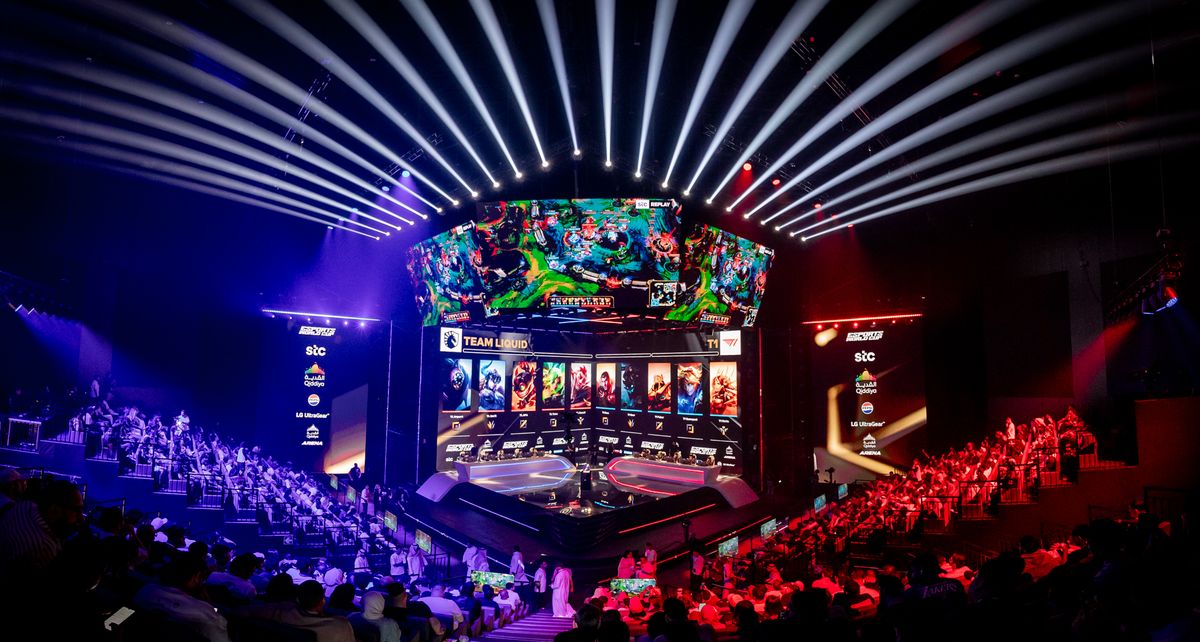
League of Legends esports is the professional competitive scene for Riot Games' multiplayer online battle arena title. It has grown from grassroots tournaments into a global phenomenon, centered on its annual World Championship and a network of regional leagues. The scene is defined by its rich history, international rivalries, and continuous structural evolution.
| First held | 2010 (World Cyber Games) |
|---|---|
| First World Championship | 2011 |
| Developer | Riot Games |
| Game release | 2009 |
| Global Head of LoL Esports (since 2024) | Chris Greeley |
| Prize money (as of June 2016) | US$29,203,916 |
| Players (as of June 2016) | 4,083 |
| Tournaments (as of June 2016) | 1,718 |
| Highest prize pool (2018 Worlds) | $6,450,000 |
The Formative Years (2011–2012)
Competitive League of Legends began in earnest in 2010 when it was featured as a promotional title at the World Cyber Games in Los Angeles, won by Counter Logic Gaming. Building on this early interest, Riot Games launched the first League of Legends World Championship in 2011 at DreamHack in Sweden. The inaugural event was a modest affair where players brought their own computers, yet it drew over 1.6 million accumulated viewers. Eight teams from North America, Europe, Singapore, and the Philippines competed, with Europe's Fnatic claiming the first title.
The competitive infrastructure expanded rapidly in 2012 with the establishment of the first regional leagues, the North American and European League Championship Series (LCS), which began play in 2013. Other foundational leagues like Brazil's CBLOL and South Korea's LCK were also created that year. The 2012 World Championship saw a major upset as Taiwan's Taipei Assassins became the first and only team from outside China, Europe, or South Korea to win the title. Viewership grew to 1.1 million concurrent viewers for the final, and Riot Games introduced a special LAN-based client to combat network issues during the playoffs, a tool that became standard for major tournaments.
The Rise of Leagues and Korean Dominance (2013–2017)
2013 marked a significant year with the launch of China's League of Legends Pro League (LPL) and the beginning of South Korea's era of supremacy at the World Championship. SK Telecom T1, featuring rookie mid-laner Lee 'Faker' Sang-hyeok, won the 2013 title at the Staples Center in Los Angeles, starting a five-year streak of Korean world champions. That same year, the United States government recognized League of Legends pro players as professional athletes, simplifying visa processes.
The tournament structure evolved considerably. The 2014 World Championship was the first to be hosted across multiple countries, a model later adopted for other regions. Riot Games introduced Championship Points for qualification and created the Mid-Season Invitational (MSI) in 2015, won by China's Edward Gaming. Between 2014 and 2017, SK Telecom T1 won two more world titles, with Samsung Galaxy teams claiming the others. A major shift occurred in 2017 when the LPL became the first league to adopt a franchising model, removing promotion and relegation. The North American LCS followed in 2018, guaranteeing team spots, raising minimum player salaries to $75,000, and mandating academy teams for talent development.
Global Growth and Pandemic Challenges (2018–2021)
China's LPL broke Korea's streak in 2018 as Invictus Gaming won the World Championship, which featured a record $6.45 million prize pool. Regional branding was unified, and the Liga Latinoamérica (LLA) was formed from a merger of Latin American circuits. In 2019, Europe's LEC also franchised, replacing its secondary league with the European Masters tournament for regional champions. That year, G2 Esports won MSI and reached the Worlds final but fell to China's FunPlus Phoenix, securing the LPL's second consecutive title.
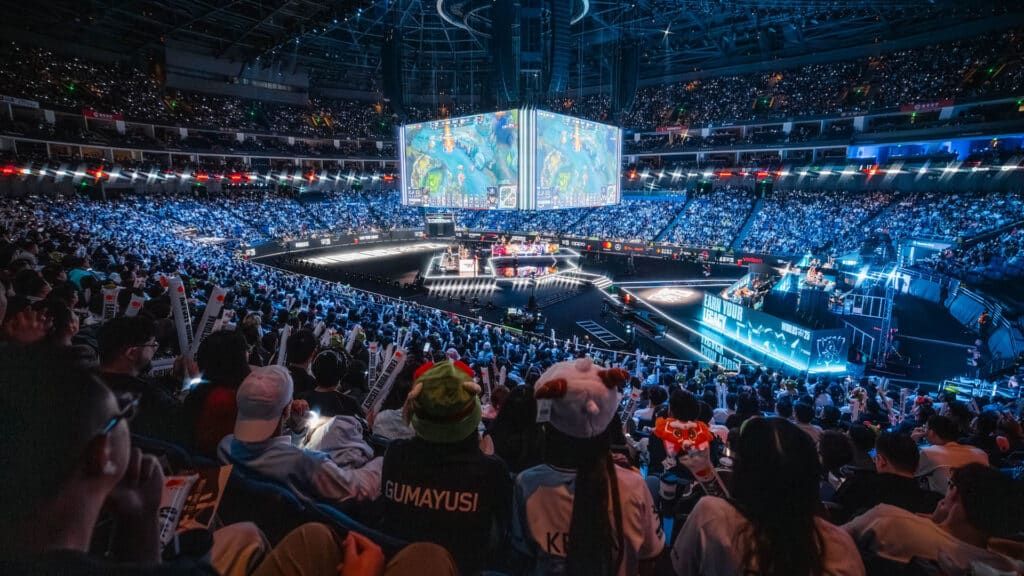
The COVID-19 pandemic disrupted the scene in 2020 and 2021. The 2020 MSI was canceled, replaced by a charity streamathon, and the World Championship was held in an isolation bubble in Shanghai. Regional leagues moved online and played without live audiences. Despite these challenges, the 2020 Worlds final was held with limited fans in Shanghai, where Damwon Gaming won for the LCK. In 2021, both MSI and Worlds were held in a single venue in Reykjavík, Iceland, without spectators, as international travel remained restricted.
A New Era of Competition and Structure (2022–2024)
Live audiences returned in 2022. That year's World Championship, co-hosted by Mexico and the US, produced a notable final where DRX, a fourth-seed team that started in the play-in stage, defeated the heavily favored T1. This was considered one of the greatest finals in history. South Korea's resurgence continued as T1 won the 2023 World Championship on home soil, and Gen.G won the 2024 MSI. T1 then secured back-to-back world titles in 2024, with Faker earning his fifth championship.
This period also saw the emergence of teams formed by online influencers, such as Disguised Toast's NACL team and Caedrel's Los Ratones in the EMEA region. League of Legends was included in the inaugural Esports World Cup in Riyadh in 2024, won by T1. Most significantly, Riot Games announced a major restructuring for 2025, introducing a three-split calendar, a new international tournament called the First Stand, and merging several regional leagues into two new Pan-American and Pacific leagues.
The Competitive Ecosystem
The heart of League of Legends esports is its tiered system of regional leagues, each with its own identity. The top-tier leagues, known as Tier 1, include South Korea's LCK, China's LPL, Europe's LEC (now EMEA Championship), and North America's LCS, which is set to merge into the Pan-American LTA. Other major regions like Brazil's CBLOL and the newly formed Pacific league (LCP) complete the global landscape. These leagues feed into the three premier international tournaments: the Mid-Season Invitational, the World Championship, and the newly announced First Stand Tournament.
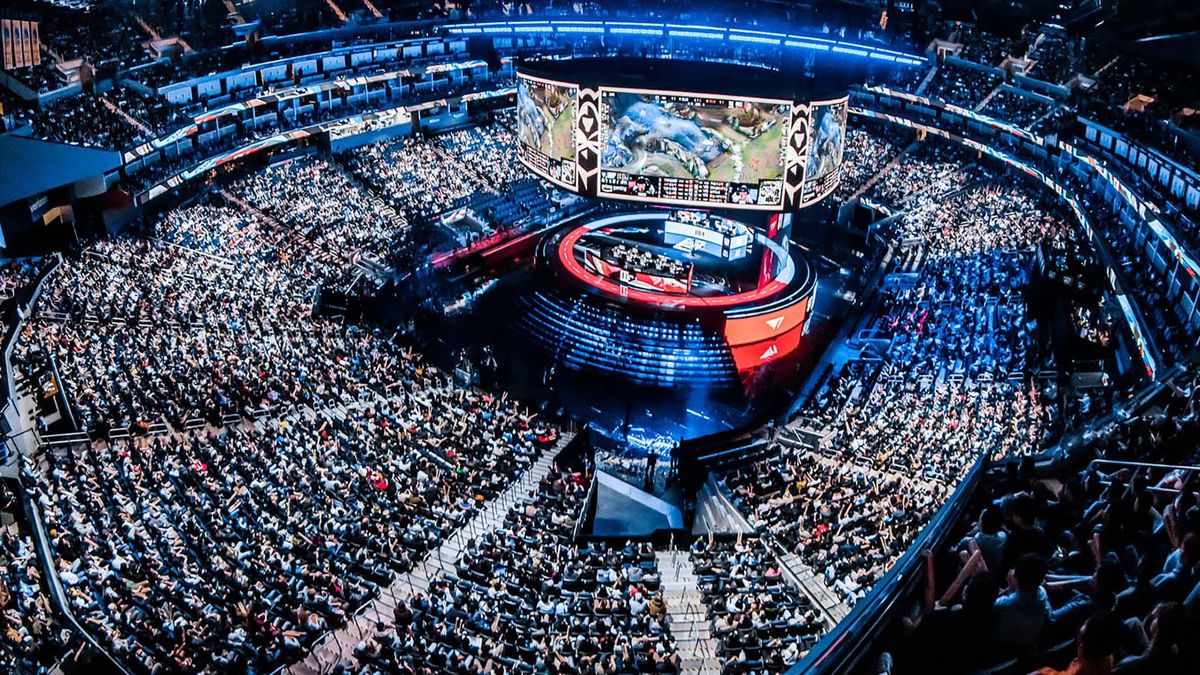
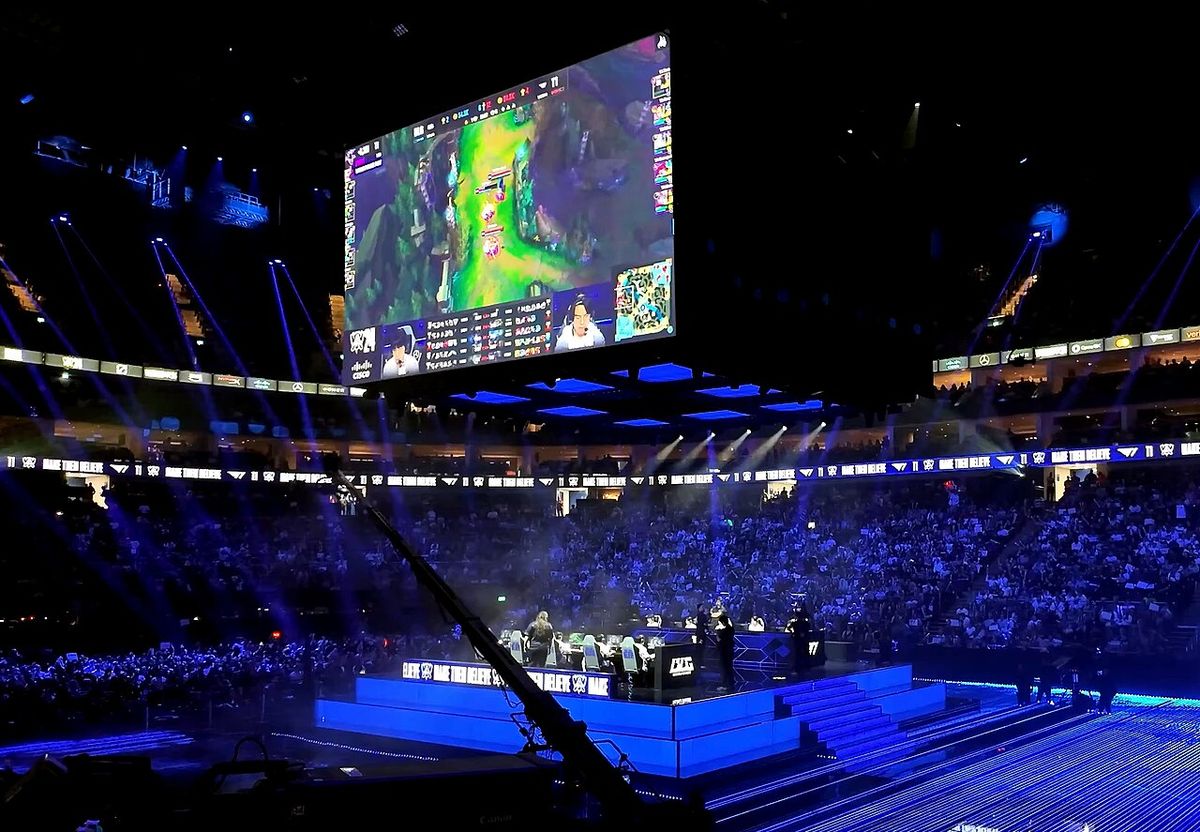
The World Championship remains the top event. It has evolved from a single-venue tournament to a global touring event hosted across multiple cities and countries, featuring a play-in stage for emerging regions and a main group and knockout stage. The tournament consistently draws tens of millions of viewers, confirming its status as one of the largest annual sporting events in the world.
FAQ
When was the first League of Legends World Championship?
The first League of Legends World Championship was held in 2011 at DreamHack in Jönköping, Sweden. It was won by the European team Fnatic and had over 1.6 million accumulated viewers.
Which team has won the most World Championships?
South Korean team T1, formerly known as SK Telecom T1, has won the most World Championships. Their mid-laner, Lee 'Faker' Sang-hyeok, has been part of all five of the organization's title wins, including victories in 2013, 2015, 2016, 2023, and 2024.
What is the highest prize pool in League of Legends esports history?
The highest prize pool for any international League of Legends competition was $6,450,000 for the 2018 World Championship, which was won by China's Invictus Gaming.
How did COVID-19 affect League of Legends esports?
The COVID-19 pandemic led to the cancellation of the 2020 Mid-Season Invitational and forced the 2020 and 2021 World Championships to be held in single-location isolation bubbles without live audiences. Regional leagues temporarily suspended operations and shifted to online play behind closed doors.
What major changes were announced for the 2025 season?
For the 2025 season, Riot Games announced a new three-split structure for all Tier 1 leagues, a third international tournament called the First Stand, and the merger of several regional leagues into two new entities: the League of Legends Championship of The Americas (LTA) and the League of Legends Championship Pacific (LCP).
Source: English Wikipedia (CC BY-SA), rewritten by the Redington Cybersport desk.