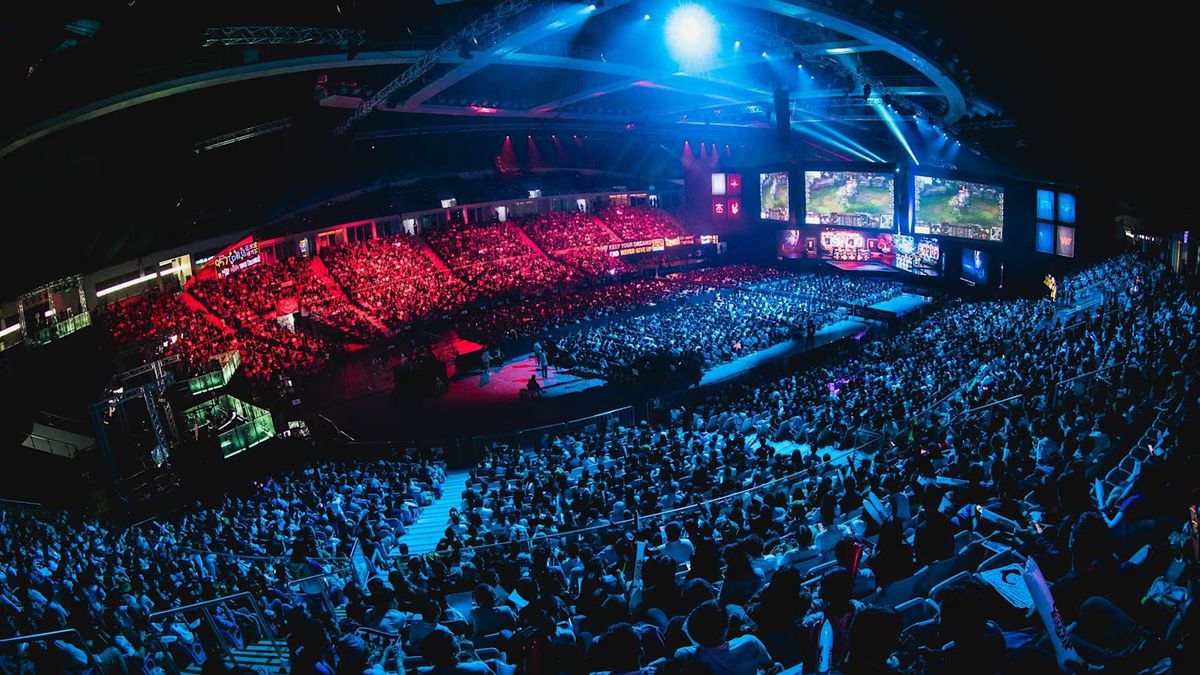
IEM Katowice Major 2019
The Intel Extreme Masters Season XIII, Katowice Major 2019 was the fourteenth Counter-Strike: Global Offensive Major Championship. Held in Poland, it crowned Astralis as the world champion for the third time, confirming their era of dominance.

| Official name | Intel Extreme Masters Season XIII – Katowice Major 2019 |
|---|---|
| Game | Counter-Strike: Global Offensive |
| First held | February 13 – March 3, 2019 |
| Location | Katowice, Silesian Voivodeship, Poland |
| Organizer | ESL |
| Prize pool | US$1,000,000 |
| Format | Swiss system group stages, single-elimination playoffs |
| Winner | Astralis |
| Runner-up | ENCE |
Tournament Background and Significance
The IEM Katowice Major 2019 was a landmark event in professional Counter-Strike. It was the fourteenth Valve-sponsored Major, the most prestigious tournament series in CS:GO, and the first Major organized by ESL since 2016. The tournament also marked the beginning of the second season of the Intel Grand Slam, a series offering a large bonus prize for winning multiple designated events.
Astralis entered as the defending champion, having won the previous Major in London. They were chasing history, aiming to win consecutive Majors and tie the record of three Major titles held by Fnatic. The event featured a one million dollar prize pool, continuing the standard set by the previous six Majors.
The Qualification Pathway
A total of twenty-four teams competed in Katowice, sourced from a multi-layered qualification system. The top eight teams from the FACEIT Major: London 2018, known as Legends, earned a direct spot in the second group stage of the Katowice Major. The next six teams from London, plus ten teams from regional qualifiers, formed the sixteen Challengers who started in the first group stage.
The regional qualifiers, called Minors, were held for the Americas, Asia, CIS, and Europe regions in January 2019. Each Minor had its own fifty thousand dollar prize pool, with $30,000 for first, $15,000 for second, and $5,000 for third. A key change was that no teams received direct invites to the Minors. All Minors were held in Katowice to preemptively avoid potential visa issues for qualifying teams.
Each Minor's format was a GSL double-elimination group stage followed by a four-team, double-elimination playoff bracket. The top two teams from each Minor advanced to the Major. A new play-in stage was introduced for this cycle, featuring the four third-place teams from each Minor. This play-in, a four-team double-elimination bracket held on January 27, decided the final two Challenger spots for the Major.
Tournament Format and Key Innovations
The Major was divided into three distinct stages. The New Challengers Stage and the New Legends Stage both used a Swiss system format, where teams competed until they achieved three wins to advance or three losses to be eliminated. ESL introduced several key changes for these stages. All matches that could result in a team advancing or being eliminated were played as best-of-three series. This meant the high and low matches of round three and all matches in rounds four and five were best-of-three, a shift from previous formats where only the fifth round featured such series.
Seeding was also completely overhauled. Instead of using placements from prior events, teams within each Swiss stage ranked the other fifteen teams. These subjective rankings were aggregated to create the initial seeding for the first round. Furthermore, ESL implemented an Elo rating system to determine all matchups after the first round. Teams started with an Elo rating matching their seed, and points were exchanged after each match, with the system used to pair teams rather than random draws or the Buchholz system. The final stage, the New Champions Stage, was a classic eight-team, single-elimination playoff bracket with all matches being best-of-three. The map pool for the event remained unchanged from the previous Major.
Team Landscape and the Group Stages
According to HLTV.org's rankings from February 11, 2019, the Major field included the world's top teams like number one Astralis, number two Team Liquid, and number three Natus Vincere. Notable top-30 teams that failed to qualify included North, mousesports, and Ghost Gaming. The New Challengers Stage ran from February 13 to 17 at the ESL Arena. From the sixteen Challenger teams, eight advanced to join the eight Legends in the next phase. These included ENCE and Team Vitality from the Europe Minor, and Renegades from the Asia Minor.
The New Legends Stage followed from February 20 to 24 at the International Congress Center in Katowice. Here, the combined sixteen teams fought for the eight playoff spots. The established Legends like Astralis, Team Liquid, MIBR, Natus Vincere, and FaZe Clan retained their status by advancing. They were joined by surging teams like ENCE and Ninjas in Pyjamas. Meanwhile, former Legends BIG, HellRaisers, and compLexity Gaming were knocked out in this stage and eliminated from the tournament.
The teams that reached the playoffs, except for the bottom two from the New Legends Stage, earned an automatic invitation to the next Major. Crucially, all teams that advanced to the New Champions Stage earned the coveted Legends status for the following tournament.
The Playoff Drama and Grand Final
The playoffs were held from February 28 to March 3 at the Spodek arena. The bracket was seeded based on records from the New Legends stage and strength of schedule. In the quarterfinals, Astralis defeated Ninjas in Pyjamas, while ENCE, the Finnish underdogs, won a victory over the world number two, Team Liquid. The other matches saw Natus Vincere beat FaZe Clan and MIBR overcome Renegades.
The semifinals set up a classic clash. ENCE, having already taken down Liquid, faced the world number three, Natus Vincere, and won to reach the grand final. In the other semifinal, Astralis convincingly beat MIBR. The final was a showdown between the dominant world number one, Astralis, and the Cinderella story of ENCE. Cast by HenryG and Sadokist, Astralis proved too strong and strategically superior, winning the series in two straight maps to claim the championship.
This victory was Astralis's third Major title, tying them with Fnatic for the most all time. They also became only the third team in history to win back-to-back Majors, following Fnatic and the Brazilian core of Luminosity Gaming and SK Gaming. ENCE, Renegades, and Ninjas in Pyjamas all earned Legends status for the next Major by reaching the playoffs. The post-Major HLTV ranking on March 4 confirmed Astralis's continued reign at number one.
Broadcast Production and Talent
The event was broadcast globally on multiple platforms including Twitch, YouTube, Steam.tv, and CS:GO's in-game GOTV client. The production was led by a deep roster of experienced esports personalities. Alex 'Machine' Richardson and Tres 'stunna' Saranthus hosted the analyst desk, while OJ Borg was the stage host. Frankie Ward served as a reporter, conducting interviews and providing updates from the venue.
The commentary and analysis were provided by notable figures. The primary casting duos were Henry 'HenryG' Greer and Matthew 'Sadokist' Trivett, and Vince Hill and Jason 'moses' O'Toole. The analyst desk featured Chad 'SPUNJ' Burchill, Sean 'seang@res' Gares, and Jacob 'Pimp' Winneche, who broke down strategies and team performances. The observer team, crucial for capturing the fast-paced in-game action, featured Connor 'Sliggy' Blomfield, Heather 'sapphiRe' Garozzo, David 'Prius' Kuntz, and Alex 'Rushly' Rush.
Legacy and Impact
The IEM Katowice Major 2019 confirmed Astralis's claim as one of the greatest teams in CS:GO history. By matching Fnatic's record of three Major titles and achieving a consecutive Major win, they entered a rarefied tier. The tournament also served as a successful return for ESL as a Major organizer, introducing format innovations like the Elo-based Swiss system and expanded best-of-three matches that would influence future events.
For the professional scene, the event highlighted the rise of new contenders. ENCE's run from the Europe Minor to the grand final captured global attention and proved that well-structured teams could challenge the established hierarchy. The results also reshaped the Legends circuit for the next Major, with teams like Renegades and Ninjas in Pyjamas earning their spots alongside the perennial powers, setting the stage for the next chapter in the CS:GO Major story.
FAQ
Who won the IEM Katowice Major 2019?
Astralis won the IEM Katowice Major 2019. They defeated ENCE in the grand finals by a score of 2-0 to secure their third Major championship.
What was the prize pool for the Katowice 2019 Major?
The prize pool for the IEM Katowice Major 2019 was one million US dollars. This was the seventh consecutive Major tournament to feature this prize pool amount.
How did teams qualify for the IEM Katowice Major?
Teams qualified in two ways. The top eight teams from the previous Major, the FACEIT Major: London 2018, qualified directly as Legends. Another sixteen teams qualified as Challengers, consisting of the next six teams from London and ten teams from regional Minors held in the Americas, Asia, CIS, and Europe.
What format did the tournament use?
The tournament used a three-stage format. The first two stages, New Challengers and New Legends, were Swiss system group stages. The final stage, New Champions, was an eight-team, single-elimination playoff bracket where all matches were best-of-three.
Why was the IEM Katowice Major 2019 significant for Astralis?
The victory was significant because it was Astralis's third Major title, tying the all-time record held by Fnatic. It also made them only the third team ever to win two consecutive Majors, confirming their status as one of the greatest teams in CS:GO history.
Source: English Wikipedia (CC BY-SA), rewritten by the Redington Cybersport desk.