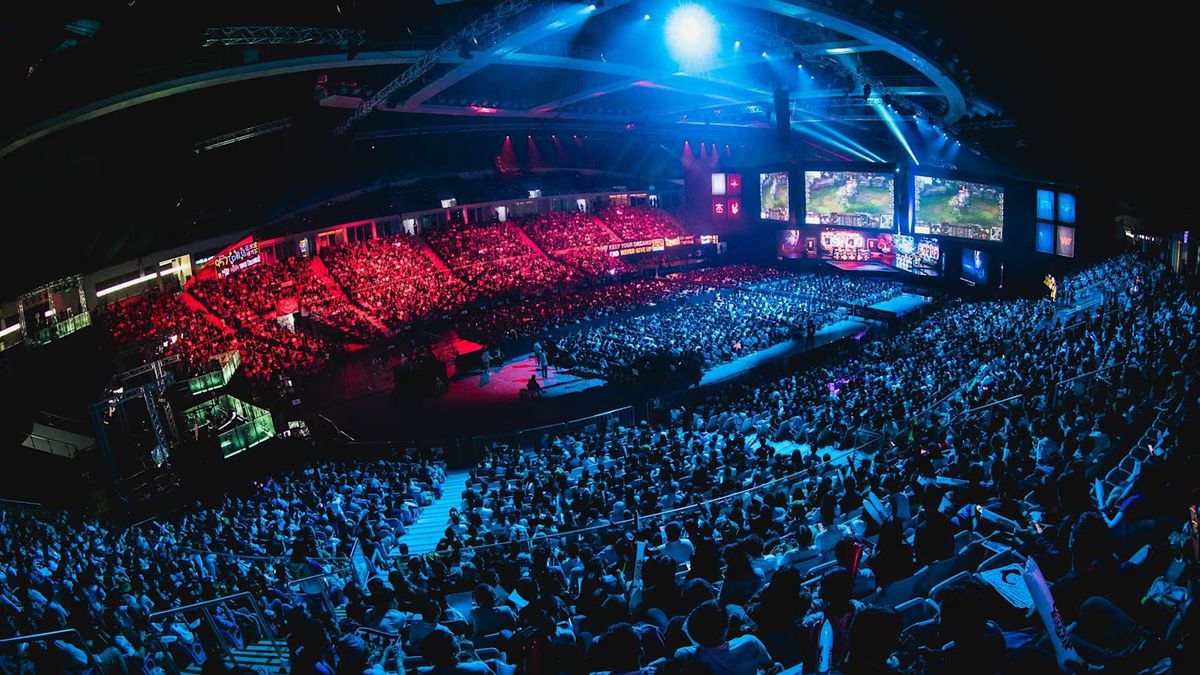
Hearthstone in esports
Hearthstone, the digital collectible card game from Blizzard Entertainment, has been a fixture in competitive esports since its release. Its official World Championship has offered million-dollar prize pools, and the game's professional scene has produced a diverse lineage of champions from around the globe.
| First tournament | Hearthstone Innkeeper's Invitational at BlizzCon, November 11, 2013 |
|---|---|
| First World Champion | James 'Firebat' Kostesich (2014) |
| Highest World Championship prize pool | $1,000,000 (2016 onward) |
| Format evolution | Last Hero Standing, Conquest, Specialist, 4-deck shield/ban |
| Notable controversy | Player suspension for political statement (2019) |
| Developer | Blizzard Entertainment |
| Release | March 2014 |
| Platform | PC, Mobile |
The Early Tournaments and First Championships
The competitive scene for Hearthstone began even before the game's official launch. The first tournament, the Hearthstone Innkeeper's Invitational, was held at BlizzCon in November 2013, featuring eight selected players. Artosis won this event and was crowned the game's first 'Grandmaster of the Hearth'. After the official release in March 2014, tournaments quickly proliferated at events like EGX Rezzed and DreamHack.
BlizzCon 2014 hosted the inaugural Hearthstone World Championship with a $250,000 prize pool, the largest at the time. It used the Last Hero Standing format. American player James 'Firebat' Kostesich defeated Wang 'Tiddler Celestial' Xieyu in the final to become the first official World Champion, earning $100,000. That year, over $1 million in total prize money was awarded across 52 tournaments, with Firebat being the most successful player.
The early scene was not without growing pains. A 2014 DreamHack Summer event was marred by a cheating scandal when winner Radu 'Rdu' Dima received an unsolicited message revealing his opponent's hand during the final. Also in 2014, a qualifying event for an IeSF championship initially barred female players, a rule that was swiftly reversed after public criticism.
The Hearthstone Championship Tour Era
In 2015, Blizzard formalized the path to its World Championship. The 2015 champion, Sebastian 'Ostkaka' Engwall of Sweden, qualified through a system of regional rankings and earned his title at BlizzCon, defeating Canadian Dylan 'Hotform' Mullins. A major structural shift came in late 2015 with the introduction of the Hearthstone Championship Tour (HCT).
The HCT split the year into seasonal circuits where players earned points from third-party tournaments to qualify for major seasonal championships. Winners of these majors earned direct invites to the World Championship. This system, which ran through 2018, dramatically increased the prize money at stake, with the 2016 HCT featuring over $1.9 million.
The World Championship itself grew in stature. The 2016 edition, won by Russian Pavel 'Pavel' Beltiukov, quadrupled the prize pool to $1 million. This tournament featured a best-of-seven Conquest format where players brought five classes, with one banned by the opponent each game. Pavel was notable for pulling off two dramatic reverse sweeps on his path to victory.
The Grandmasters League and Format Changes
In 2019, Blizzard replaced the HCT with a new system centered on the Hearthstone Grandmasters league, a region-locked professional circuit. The format for competition also changed significantly. Early seasons used the 'Specialist' format, where players brought three decks from a single class. This was soon replaced by a more complex system where players brought four decks from different classes.
In this four-deck format, players would first 'shield' one deck their opponent could not ban, then each ban one of the opponent's remaining decks. A player who won with a deck had to switch to a different one for the next game, while a losing player could replay the same deck. This format aimed to test deeper strategic preparation.
The 2019 World Championship, held in Taipei in April, was the first under this new era and was won by Norwegian Casper 'Hunterace' Notto. Later that year, the Grandmasters league was at the center of a major controversy when player Chung 'Blitzchung' Ng Wai was suspended and had his prize money forfeited for making a political statement about Hong Kong during a broadcast. After widespread criticism, Blizzard returned his winnings and reduced the suspension.
A Diverse Lineage of World Champions
The Hearthstone World Championship has crowned a wide array of champions from different regions, underscoring the game's global appeal. After the early wins by Firebat (USA) and Ostkaka (Sweden), Pavel brought the title to Russia in 2016. In 2017, the championship was won by Taiwanese player Chen 'Tom60229' WeiLin.
The 2019 championship saw a historic victory for Chinese player Xiaomeng 'VKLiooon' Li. She not only won $200,000 but also became the first woman to win a Hearthstone world championship and any BlizzCon tournament. The early 2020s saw back-to-back Japanese champions, with Kenta 'Glory' Sato winning in 2020 and Wataru 'Posesi' Ishibashi defending his country's title in 2021 by defeating Glory in the final.
More recent champions have come from Europe. German Raphael 'Bunnyhoppor' Peltzer won in 2022, defeating his own Team Liquid teammate in the final. British Thomas 'PocketTrain' Swinton claimed the 2023 title, and the 2024 championship was won by Chinese player 'mlYanming(陌路烟明)'. The prize for the champion has settled at $100,000 since 2022.
The Ecosystem Beyond the Stage
Professional Hearthstone has always existed beyond the tournament stage. For many top players, livestreaming on platforms like Twitch has been a primary source of income, sometimes exceeding tournament winnings. As early as 2014, the game was noted as one of the most popular on Twitch, with large audiences watching skilled play.
The culture of high-level play also includes professional coaching, where experienced players offer strategic advice for a fee. Conversely, the practice of 'win trading', deliberately forfeiting games to boost another player's rank, is considered cheating and can result in permanent bans from Blizzard.
The game's design itself is a constant topic in the competitive community. Hearthstone's inherent randomness, driven by a random number generator (RNG), can dramatically affect outcomes. The introduction of new cards through expansions continually shifts the competitive balance, a process Blizzard has staffed with former pro players like Ryan 'Realz' Masterson to help manage.
FAQ
Who was the first Hearthstone World Champion?
The first Hearthstone World Champion was American player James 'Firebat' Kostesich. He won the title at BlizzCon 2014, defeating Wang 'Tiddler Celestial' Xieyu in the final and earning a $100,000 prize from a $250,000 total pool.
What is the prize pool for the Hearthstone World Championship?
The prize pool for the Hearthstone World Championship was $250,000 in 2014 and 2015. It increased to $1,000,000 from 2016 through 2021, with the champion earning $250,000 initially, then $200,000. Since 2022, the total pool has been lower, with champions receiving $100,000.
Has a woman ever won the Hearthstone World Championship?
Yes. Chinese player Xiaomeng 'VKLiooon' Li won the Hearthstone World Championship in 2019. She was the first woman to win this title and also the first woman to win any tournament at BlizzCon.
What was the Blitzchung controversy in Hearthstone esports?
In October 2019, player Chung 'Blitzchung' Ng Wai was suspended from competition for one year and had his prize money forfeited after expressing support for the Hong Kong protests during a live broadcast. Blizzard stated this violated rules against damaging the company's reputation. After public backlash, Blizzard returned his money and reduced the suspension to six months.
What formats are used in professional Hearthstone?
Professional Hearthstone has used several formats. Early championships used Last Hero Standing and Conquest. The Grandmasters league introduced the Specialist format (three decks from one class) and later a four-deck system with a 'shield' mechanic and bans, where winners must switch decks.
Source: English Wikipedia (CC BY-SA), rewritten by the Redington Cybersport desk.