Twin Galaxies
Twin Galaxies is a foundational institution in competitive gaming, originally established as an arcade and the official global authority for video game world records. Its history as a scorekeeper, event organizer, and pioneer of professional gaming teams helped shape the early culture of esports.
| Founded | November 10, 1981 |
|---|---|
| Founder | Walter Day |
| Headquarters | Ottumwa, Iowa, United States |
| First Official Event | California vs. North Carolina All-Star Playoff (August 1982) |
| First World Championship | January 8–9, 1983 |
| Key Publication | Twin Galaxies' Official Video Game & Pinball Book of World Records (1998) |
| Official Role | Supplier of video game records to Guinness World Records |
| Notable Documentary | The King of Kong: A Fistful of Quarters (2007) |
Origins and the Birth of a Scoreboard
The story of Twin Galaxies began with Walter Day's four-month tour of over 100 American arcades in mid-1981. He meticulously recorded the high scores he found, compiling a database that would become the bedrock of competitive video gaming. On November 10, 1981, he opened his own arcade in Ottumwa, Iowa, naming it Twin Galaxies.
This personal project became a public institution on February 9, 1982, when Day released his database as the Twin Galaxies National Scoreboard. This act formally established a centralized, verified leaderboard for arcade games. The organization's credibility grew quickly, with major publications like Video Games magazine, Joystick, and even USA Today soon publishing its high-score charts. International recognition followed, with scores appearing in magazines like Videogiochi in Milan, Italy.
Pioneering Competitive Events and the First Pros
Twin Galaxies did not just track scores, it created competition. Its first major event, the California Challenges North Carolina All-Star Playoff, was held over the weekend of August 27–30, 1982. Teams from each state played 17 different games across two locations, Lakewood, California and Wrightsville Beach, North Carolina, with California winning 10–7. This contest was documented in the September 1982 book Defending the Galaxy, which declared Twin Galaxies the Video Game Capital of the World. Ottumwa's mayor made the same official declaration on November 30, 1982, a claim later backed by the Iowa Governor and major industry groups in a March 1983 ceremony.
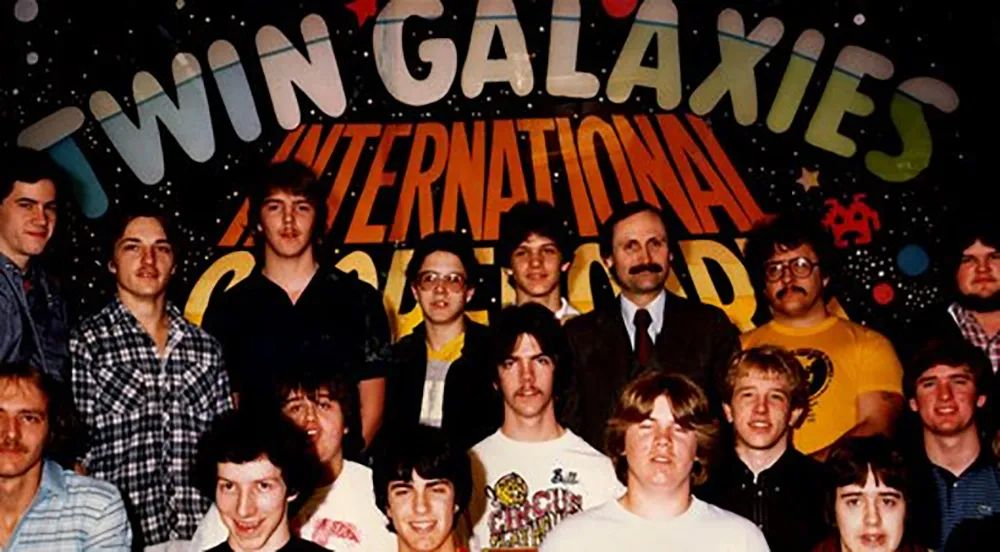
The organization staged its first world championship on January 8–9, 1983, which was filmed by ABC-TV's That's Incredible and aired on February 21. More significantly, in March 1983, Twin Galaxies was contracted to assemble a professional troupe of high-scorers for the Electronic Circus, a touring show. Though the Circus folded quickly, its players are considered the first professionally contracted video game players in history. This led directly to the July 25, 1983, founding of the U.S. National Video Game Team in Ottumwa. The team toured the U.S. that summer in a 44-foot bus, conducting the 1983 Video Game Masters Tournament, the results of which were published in the 1984 Guinness World Records.
The Record Book and Organizational Changes
For years, Twin Galaxies served as the official source of video game records for the Guinness Book of World Records, a relationship that lasted until 1988 when interest in arcade games declined. The organization confirmed its archival role with the February 8, 1998, publication of The Twin Galaxies' Official Video Game & Pinball Book of World Records, a massive 984-page book containing scores compiled since 1981. Updated editions followed as a three-volume set in 2007 and again in 2009.
Founder Walter Day left the organization in 2010 to pursue music. Ownership changed hands several times afterwards, and in 2013 Twin Galaxies began charging a fee for score submissions. In March 2014, Jace Hall announced he was the new head custodian, and by April 28, 2014, the full website, including its historic database and forums, was back online. In the modern era, Twin Galaxies operates as a social media platform and video game database, and it resumed its role as the official score supplier to Guinness World Records.
A Legacy of Championships and Festivals
Beyond its early tournaments, Twin Galaxies continued to host landmark events. In the first week of July 1985, it held the first Twin Galaxies Iron Man Contest, where players aimed for marathon gaming sessions with a $10,000 prize for anyone passing 100 hours. The winner, 18-year-old James Vollandt, played Joust for 67.5 hours, setting a score record that stood until 2010.
The organization revived championship play in the 2000s. On June 2–4, 2001, it conducted the first Classic Video Game World Championship at the Funspot Family Fun Center in New Hampshire, won by Dwayne Richard. This event descended from earlier Coronation Day Championships held in the 1980s. That same year, on the weekend of July 20–22, Twin Galaxies held the first Console Video Game World Championship at its 1st Annual Video Game Festival at the Mall of America in Minnesota. These festivals were repeated in 2002. Twin Galaxies also organized the first Video Game Film Festival on June 2, 2001, to document gaming's cultural impact. In 2005, Walter Day led a group to Paris to propose a London vs. Paris championship and helped revive the U.S. National Video Game Team's New England chapter.
Cultural Impact and Documentary Spotlight
Twin Galaxies has been a central subject in several documentaries that explore competitive gaming. The 2007 film The King of Kong: A Fistful of Quarters brought the organization and its founder, Walter Day, to a wide audience, focusing on the rivalry between Billy Mitchell and Steve Wiebe for the Donkey Kong high score. The film was also critical of Twin Galaxies' handling of score challenges and suggested conflicts of interest within its structure.
Earlier in 2007, Chasing Ghosts: Beyond the Arcade, which profiled 1980s gaming champions, premiered at the Sundance Film Festival. The 2008 documentary Frag dedicated its first ten minutes to Twin Galaxies' pioneering role in the early 1980s. The 2016 film Man vs Snake: The Long and Twisted Tale of Nibbler also included the organization's history and its role in high-score competitions, featuring Walter Day throughout. The organization has also produced limited-edition event posters since August 1, 1982, documenting its history in a collectible form.
Controversies and Record Validation
The organization's authority as record-keeper has faced significant challenges. Twin Galaxies has been forced to invalidate high-profile records after investigations found cheating. In one major case, record-holder Todd Rogers was found to have submitted fake scores into the database, sometimes with the assistance of a friend who was a Twin Galaxies referee.
In another prominent controversy, famed player Billy Mitchell had several records stripped after Twin Galaxies determined he had used an emulator to achieve scores, violating rules requiring play on original arcade hardware. These incidents highlighted the difficulties and intense scrutiny involved in maintaining a legitimate historical database for competitive gaming, a core function Twin Galaxies has performed for decades.
FAQ
What is Twin Galaxies?
Twin Galaxies is a social media platform and video game database best known for being the official supplier of video game world records to Guinness World Records. It began as an arcade and scorekeeping authority in 1981.
Who founded Twin Galaxies?
Twin Galaxies was founded by Walter Day, who opened the Twin Galaxies arcade in Ottumwa, Iowa, on November 10, 1981, after compiling a national database of arcade high scores.
Did Twin Galaxies have a professional gaming team?
Yes. On July 25, 1983, Twin Galaxies established the U.S. National Video Game Team, believed to be the first professional team of its kind. It toured the United States in a bus filled with arcade games and conducted national tournaments.
What was the Twin Galaxies Iron Man Contest?
Held in July 1985, the Iron Man Contest challenged players to game for as long as possible. The winner, James Vollandt, played Joust for 67.5 hours. A prize of $10,000 was offered for anyone who passed 100 hours.
Why were Billy Mitchell's records removed from Twin Galaxies?
Twin Galaxies invalidated Billy Mitchell's records after an investigation concluded he used a video game emulator to achieve scores, which violated the rules requiring play on an original arcade machine.
Source: English Wikipedia (CC BY-SA), rewritten by the Redington Cybersport desk.