Peñarol
Club Atlético Peñarol, commonly known as Peñarol, is a Uruguayan professional sports club from Montevideo, known globally for its football team. The club is one of the most decorated in South American history, with over a century of domestic and international triumphs. Its intense rivalry with Club Nacional de Football, known as the Uruguayan Clásico, is one of the oldest and longest in world football.
| Founded | 13 December 1913 (as Peñarol) |
|---|---|
| Origin | Established 28 September 1891 as Central Uruguay Railway Cricket Club (CURCC) |
| Location | Montevideo, Uruguay |
| Home Stadium | Estadio Campeón del Siglo (since 2016) |
| Previous Stadium | Estadio Centenario (principal venue 1933 onward) |
| Major Honors | 108 officially recognized titles (4 intercontinental, 5 continental, 99 domestic) |
| Notable Rivalry | Club Nacional de Football (Uruguayan Clásico) |
| First European Tour | 1927 (19 matches across Europe) |
| 20th Century Recognition | Best South American club of the 20th century (IFFHS, 2009) |
From Railway Club to Football Power
The origins of Peñarol are rooted in the Central Uruguay Railway Company. On 28 September 1891, its employees, predominantly British, founded the Central Uruguay Railway Cricket Club (CURCC) to promote cricket and rugby. The club was based in the Peñarol neighborhood, a name derived from the Italian city of Pinerolo. By 1892, the focus had shifted decisively to association football, with the club's first football match ending in a 2–0 victory against an English high school team.
In 1900, the CURCC was a founding member of the Uruguay Association Football League and won its first Uruguayan championship that same year. The club repeated this success in 1901, 1905, and 1907. Tensions grew between the football club and the railway company, especially after fans burned a train car used by rival teams. This conflict, coupled with the company's desire to distance itself from the club's local reputation, led to a formal separation. On 13 December 1913, the football section was officially established as Club Atlético Peñarol, taking over the league spot of the CURCC. The very next day featured the first official Clásico against Nacional. The original CURCC continued as an amateur entity before dissolving in 1915, donating its trophies to the British Hospital of Montevideo.
Early Challenges and Consolidation
After its foundation, Peñarol won its first league titles in 1918 and 1920. The club faced a major challenge in 1922 when it was disqualified by the Asociación Uruguaya de Fútbol for playing an exhibition match with Argentine club Racing, which was affiliated with a dissident league. In response, Peñarol helped form a rival league, the Uruguayan Football Federation (FUF), which it won in 1924. The schism ended in 1926 after Peñarol won the Copa del Consejo Provisorio, triggering a merger between the two football bodies.
A landmark moment came in 1927 with Peñarol's first tour of Europe. Over 80 days, the team played 19 matches in six countries. The tour began with losses in Central Europe before securing a first win against Eintracht Frankfurt. Notable matches included two games against FC Barcelona and two victories over Atlético Madrid. The team finished the tour with 7 wins, 4 draws, and 8 losses, with Antonio Sacco as the top scorer with 9 goals. This tour was a bold statement of the club's growing ambition on the international stage.
Professional Era and Domestic Dominance
Peñarol was at the forefront of the professional era in Uruguay, playing the first professional league match against River Plate in 1932. The club won that inaugural professional championship. After placing second in 1933 and 1934, Peñarol then won four consecutive league titles from 1935 to 1938. The club opened its new home, the Estadio Centenario, in 1930, and it would serve as the principal venue for decades.
Success continued through the 1940s and 1950s. Peñarol won championships in 1944, 1945, and 1949, with players like Óscar Míguez and Nicolás Falero topping the scoring charts. The 1950s brought further titles in 1951, 1953, 1954, 1958, and 1959. This period of consistent domestic success set the stage for the club's explosion onto the continental scene.
The Golden Era of Continental Dominance
Peñarol's greatest period of success began in the 1960s. Having qualified by winning the 1959 national championship, the club won the inaugural Copa Libertadores in 1960 and successfully defended the title in 1961. That 1961 victory was followed by the club's first Intercontinental Cup win against Portugal's Benfica, secured in a third and decisive match. Domestically, the club won five consecutive Uruguayan championships from 1958 to 1962.
The triumphs continued throughout the 1960s. The club won a third Copa Libertadores in 1966, defeating River Plate of Argentina 4–2 in the final. That same year, Peñarol won its second Intercontinental Cup, defeating Real Madrid both at home and in Madrid. During this period, Peñarol also set a Uruguayan league record by going 56 games undefeated from 3 September 1966 to 14 September 1968. Star striker Alberto Spencer became the Copa Libertadores' all-time top scorer while playing for the club. The decade closed with the club winning the Intercontinental Champions' Supercup in 1969.
Sustained Excellence and More Continental Glory
The 1970s and 1980s saw Peñarol maintain its status through the exploits of notable players. Forward Fernando Morena became a major national figure. In 1978, he set a single-season scoring record of 36 goals and scored seven goals in a single match against Huracán Buceo. He was the Uruguayan league's top scorer six years in a row and the Copa Libertadores top scorer in 1974 and 1975. The club won three consecutive championships from 1973 to 1975 and added titles in 1978 and 1979.
Under Morena's leadership, and later with Rubén Paz, the club secured further silverware in the early 1980s. Peñarol won its fourth Copa Libertadores in 1982, with Morena scoring the winning goal in the final minutes against Cobreloa. He was also the tournament's top scorer. Later that year the club won its third Intercontinental Cup, defeating England's Aston Villa 2–0. Despite financial problems, Peñarol captured a historic fifth Copa Libertadores in 1987 with a dramatic last-second goal by Diego Aguirre in extra time against América de Cali.
Modern Resurgence and Domestic Control
The 1990s began with a centennial celebration in 1991, albeit amid a historical dispute with rivals Nacional over the club's founding date. On the pitch, Peñarol entered another period of domestic dominance. Led by Pablo Bengoechea, the young Antonio Pacheco, and coach Gregorio Pérez, the club won the Uruguayan championship five years in a row from 1993 to 1997. The club also reached the final of the Copa Conmebol in 1994 and 1995.
After a title in 1999, the new millennium saw fluctuating fortunes. Peñarol won the national championship in 2003 under Diego Aguirre, defeating Nacional in the final. The club then experienced a title drought until the 2009-10 season, when the team won the Clausura tournament with 14 victories in 15 games, including a run of 12 consecutive wins. This qualified Peñarol for the 2011 Copa Libertadores, where it reached the final before losing to Santos. In 2009, the club's historical stature was formally recognized when the IFFHS named it the best South American club of the 20th century.
Identity, Rivalry, and Home
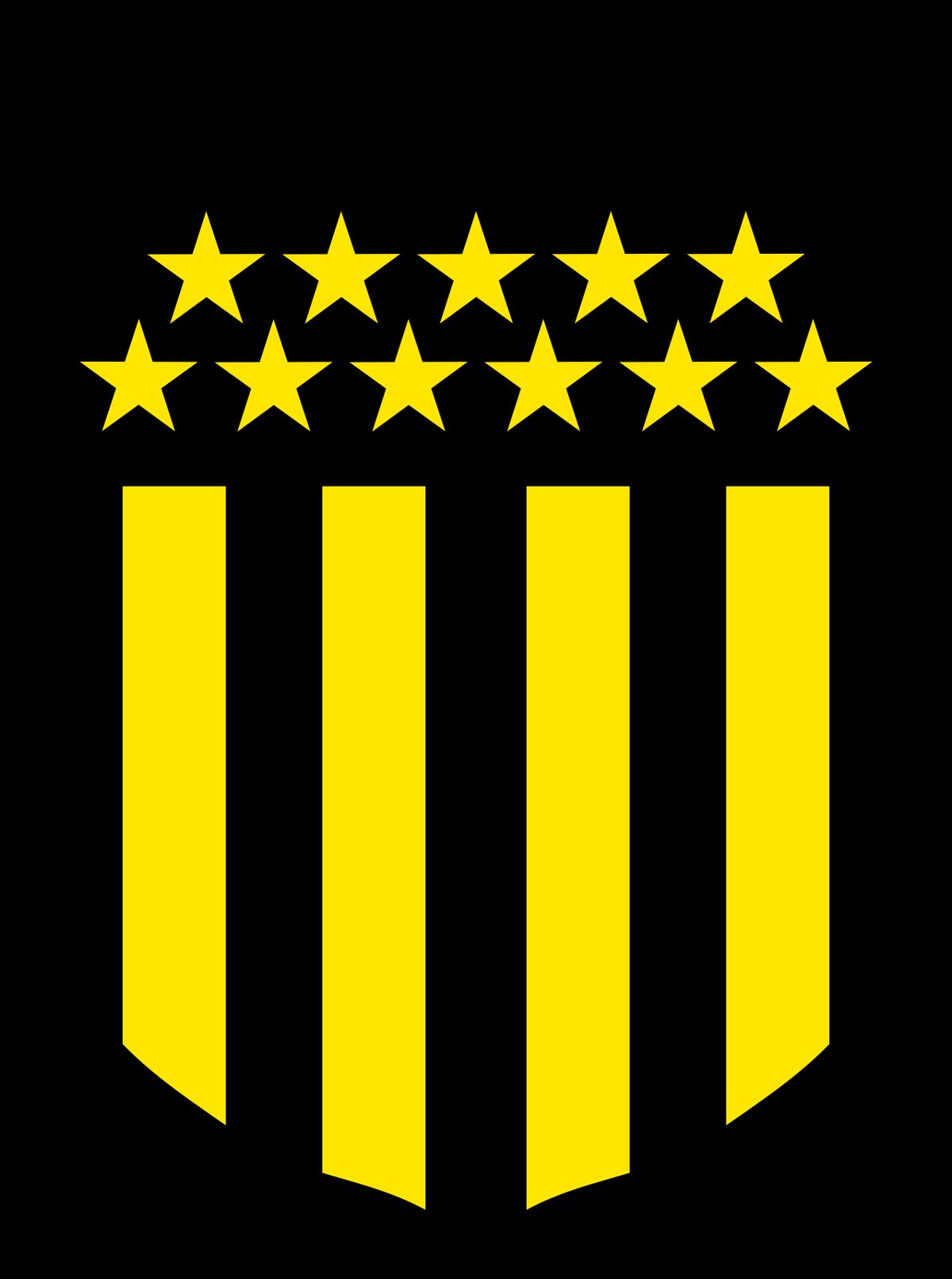
Peñarol's identity is deeply connected to its colors and crest. The yellow and black stripes are said to be inspired by the Stephenson's Rocket locomotive and the railway workers' union, honoring the club's industrial roots. The club badge, designed by architect Constante Facello, features five black and four yellow stripes with eleven stars on a black background, representing the eleven players on the field.
The club's defining rivalry is with Club Nacional de Football. Known as the Uruguayan Clásico, their first official match was in 1900, a 2–0 win for Peñarol, and they have faced each other over 500 times. As of 2026, Peñarol holds the advantage in the head-to-head record. The club played its home matches at the Estadio Centenario from 1933 before moving to its own stadium, the Estadio Campeón del Siglo, in 2016. The club has never been relegated from the top division of Uruguayan football.
FAQ
When was Peñarol founded?
The club was officially founded as Club Atlético Peñarol on 13 December 1913. This date marks the separation of the football section from the Central Uruguay Railway Cricket Club (CURCC), which was originally established on 28 September 1891.
Why are Peñarol's colors yellow and black?
The yellow and black colors are inspired by the Stephenson's Rocket locomotive and the railway workers' union. This pays homage to the club's origins with the Central Uruguay Railway Company. The original CURCC colors were black and orange.
How many Copa Libertadores has Peñarol won?
Peñarol has won the Copa Libertadores five times. The club was the inaugural champion in 1960 and also won the tournament in 1961, 1966, 1982, and 1987.
What is Peñarol's record undefeated streak in the Uruguayan league?
Peñarol holds the record for the longest undefeated run in Uruguayan league history. The streak lasted for 56 games, from 3 September 1966 to 14 September 1968.
Who is Peñarol's biggest rival?
Peñarol's biggest and oldest rival is Club Nacional de Football. Their matchup is known as the Uruguayan Clásico, with the first official meeting held in 1900. The derby is considered one of the oldest in international football.
Source: English Wikipedia (CC BY-SA), rewritten by the Redington Cybersport desk.