Life
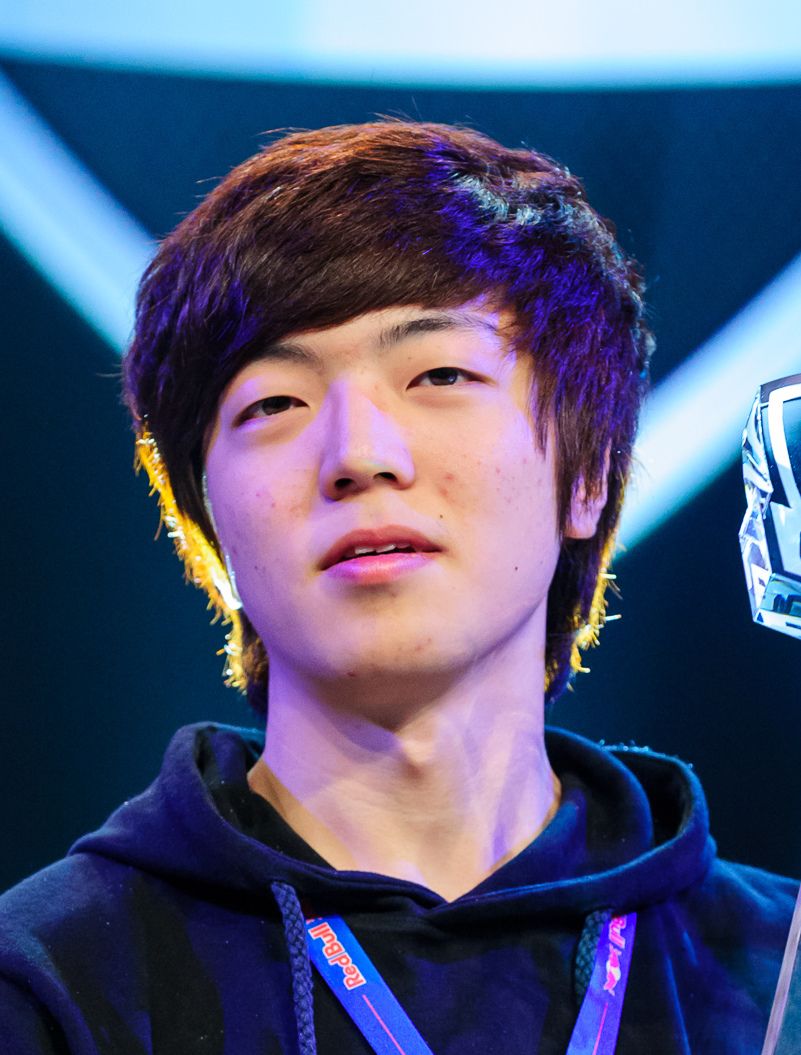
Lee Seung-Hyun, known professionally as Life, is a South Korean former StarCraft II player. He is widely regarded as one of the most successful players in the game's history, with multiple premier tournament victories. His career ended abruptly in 2016 following a match-fixing scandal that resulted in a lifetime ban from Korean esports.
| Born | January 11, 1997 |
|---|---|
| Nationality | South Korean |
| Game | StarCraft II |
| Role | Professional Player |
| Teams | Team Zenex, StarTale, KT Rolster, Afreeca Freecs |
| Major Titles | WCS Global Finals (2014), GSL (2012 S4, 2015 S1), GSL Blizzard Cup (2012), IEM New York (2013) |
| Career Prize Money | Approximately $475,000 |
| Status | Retired, lifetime ban from Korean esports |
A Prodigy Emerges
Lee Seung-Hyun began his professional career at the age of 14, joining Team Zenex in March 2011. He quickly made a name for himself in online weekly tournaments like the iCCup Korean Weekly, winning his first event within a month by defeating Jung "jjakji" Ji-hoon. Over his first seven months, he secured top-eight finishes or better nine times, reaching four finals and winning two of them. His early rivalry with player Yun "TaeJa" Young-seo saw TaeJa defeat him five times in these weekly events.
Life's team league performances also drew attention. In the Global StarCraft II Team League (GSTL), he once achieved an "All-Kill" by defeating all five players from Team Liquid. After Team Zenex merged with StarTale in July 2012, Life placed second in the Team Liquid StarLeague, losing only to Jang "Creator" Hyun Woo in the finals. This consistent performance led to his debut in the GSL Code S, the highest level of Korean competition.
His first GSL Season in 2012 was historic. Life defeated established stars like Lim "NesTea" Jae Duk, Ahn "Seed" Sang-wong, Lee "MarineKing" Jung-hoon, and TaeJa to reach the grand finals. There, he faced Jung "Mvp" Jong-hun. Life won the series four games to three, becoming the GSL champion at 15 years old. This achievement, known as "walking the Royal Road," made him the youngest GSL champion and the first player to win the league on his first attempt.
Global Success and Fluctuating Form
Immediately after his GSL victory, Life traveled to Dallas, Texas, and won the 2012 MLG Fall Championship. He rallied from a 1-3 deficit against Lee "Leenock" Dong-nyoung in the finals, becoming the youngest MLG champion. His 2012 campaign concluded with a victory at the GSL Blizzard Cup, where he defeated Park "DongRaeGu" Soo-ho and Leenock before overcoming a 0-2 deficit against Won "Parting" Lee-sak in the finals to win four straight games.
The year 2013 was one of transition and turbulence. Life won Iron Squid 2 by rallying from a 0-3 deficit against Park "DRG" Soo-ho. After the game's shift to the Heart of the Swarm expansion, he won the 2013 MLG Winter event by defeating Lee "Flash" Young-ho, making him the first player to win consecutive MLG championships. However, his form in the Korean World Championship Series (WCS) faltered. He was eliminated in the group stage of the first season and failed to progress beyond the round of 16 in the OnGameNet StarLeague (OSL) season, which relegated him to the Challenger League. A loss there meant he had to compete in Up & Down matches, where he lost his first two games and failed to qualify for the next season's Code S.
His competitive drive returned late in 2013 through foreign tournaments. He reached the semifinals at DreamHack Bucharest, losing to the eventual champion TaeJa. In October, he won Intel Extreme Masters New York 2013, defeating Johan "Naniwa" Lucches 4-2 in the finals. He then placed second at DreamHack Winter 2013, losing to TaeJa again in the grand finals after fighting through the lower bracket.
World Champion and Sustained Excellence
Life's 2014 season built toward his crowning achievement. He reached the semifinals of GSL Season 1 and won DreamHack Bucharest. By accumulating enough World Championship Points, he qualified for the 2014 WCS Global Finals at BlizzCon. At the event, he won his first two matches to reach the semifinals, where he defeated TaeJa, considered the strongest remaining player. In the championship match, he beat Mun "MMA" Seong-won 4-1 to become the world champion. Reflecting on his journey, Life stated that after a difficult year, he had become more humble, which helped him work harder. He finished the year as runner-up at DreamHack Winter.
His success continued into 2015. He started the year by winning IEM Taipei, defeating top player Cho "Maru" Seong Ju in the finals. After departing StarTale and signing with KT Rolster, he won the 2015 GSL Season 1, defeating Parting for his second GSL title. He also secured top-four finishes in the StarCraft II StarLeague (SSL) Season 1 and the KeSPA Cup. Although his passion seemed to wane again by year's end, he had enough points to reach the 2015 WCS Global Finals, where he finished second after a 3-4 loss to Kim "sOs" Yoo Jin.
The Match-Fixing Scandal and Ban
In January 2016, Life signed with Afreeca Freecs. His career ended that same year. On January 29, the Korean e-Sports Association announced Life was under investigation by the Changwon district prosecutors' office for match-fixing. Three months later, on April 21, prosecutors confirmed Life, along with player Jung "Bbyong" Woo-yong and 11 financial backers and brokers, had been convicted of fixing two matches during the KeSPA Cup.
The legal and professional consequences were severe. Life was sentenced to 18 months in prison with a three-year suspended sentence and fined 70 million Korean won, approximately $58,000. Critically, he received a lifetime ban from participating in any Korean esports events, a permanent exclusion from the professional scene. ESPN regarded this scandal as the most disappointing event in esports for 2016.
Legacy and Impact
Life's career is defined by both historic achievement and scandal. As a player, his accomplishments are significant. He won the 2014 WCS world championship, two GSL titles, the GSL Blizzard Cup, and premier events under the MLG, DreamHack, IEM, and Iron Squid banners. His aggressive Zerg play made him a constant threat and a fan favorite. At his career's end, he held the second-most premier tournament victories and the second-highest prize earnings, around $475,000, in StarCraft II history.
His career also represents one of the most dramatic falls in esports. The match-fixing scandal permanently marred his reputation and served as a stark lesson about integrity in professional competition. Life remains a figure of great talent whose story is a complex chapter in StarCraft II history, remembered for his youthful brilliance and the circumstances that led to his permanent removal from the game.
FAQ
Why is Life famous in StarCraft II?
Life is famous for being one of the most successful StarCraft II players ever. He won numerous premier tournaments including the 2014 WCS world championship, two GSL titles, and events like MLG, DreamHack, and IEM. He was also the youngest player to win a GSL title at age 15.
What happened to Life's esports career?
Life's professional career ended in 2016 when he was convicted of match-fixing in two KeSPA Cup matches. He received an 18-month suspended prison sentence, a fine, and a lifetime ban from all Korean esports events, which effectively ended his playing career.
How much prize money did Life win?
Over the course of his career, Life accumulated approximately $475,000 in prize money, which was the second-highest total among all StarCraft II players at the time his career ended.
What teams did Life play for?
Life played for several teams during his career. He started with Team Zenex, which later merged with StarTale. He subsequently played for KT Rolster and had a brief stint with Afreeca Freecs in 2016 before his ban.
What was Life's biggest tournament win?
Life's biggest tournament win was the 2014 StarCraft II World Championship Series (WCS) Global Finals at BlizzCon, where he was crowned the world champion. This is considered the most prestigious title in StarCraft II.
Source: English Wikipedia (CC BY-SA), rewritten by the Redington Cybersport desk.