Valorant Champions Tour
The Valorant Champions Tour (VCT) is the premier global esports circuit for Riot Games' tactical shooter Valorant. Since its 2021 debut, it has evolved from an open-qualifier model to a franchised league system, and now back to open competition, defining the professional landscape of the game.
| First held | 2021 |
|---|---|
| Organizer | Riot Games |
| Game | Valorant |
| Top-level event | Valorant Champions |
| Key tournaments | Masters, Champions |
| Major regions (2023-2026) | Americas, EMEA, Pacific, China |
| Notable initiative | Valorant Game Changers |
| 2021 Peak viewership | 1,089,068 (Champions) |
| 2022 Champions location | Istanbul, Turkey |
| 2021 Champions location | Berlin, Germany |
The First Era of Open Competition
The Valorant Champions Tour was announced by Riot Games in November 2020, with its inaugural season launching in 2021. The original structure was a three-tiered global system designed to build towards a world championship. It began with regional Challengers events, which were split into seven regions: North America, Brazil, Latin America, EMEA, Southeast Asia, Korea, and Japan. This Southeast Asia region later expanded to include South Asia and Oceania, becoming the Asia-Pacific region. Teams that advanced past these open qualifiers moved on to the international Masters tournaments.
The season culminated in Valorant Champions, the world championship event where the top 16 teams from the Masters circuit competed for the title. Riot hired various third-party companies to operate and broadcast these early events. For North America, they partnered with Nerd Street Gamers. For Spanish-language broadcasts, they worked with Liga de Videojuegos Profesional, and for Oceania, with LetsPlay.Live.
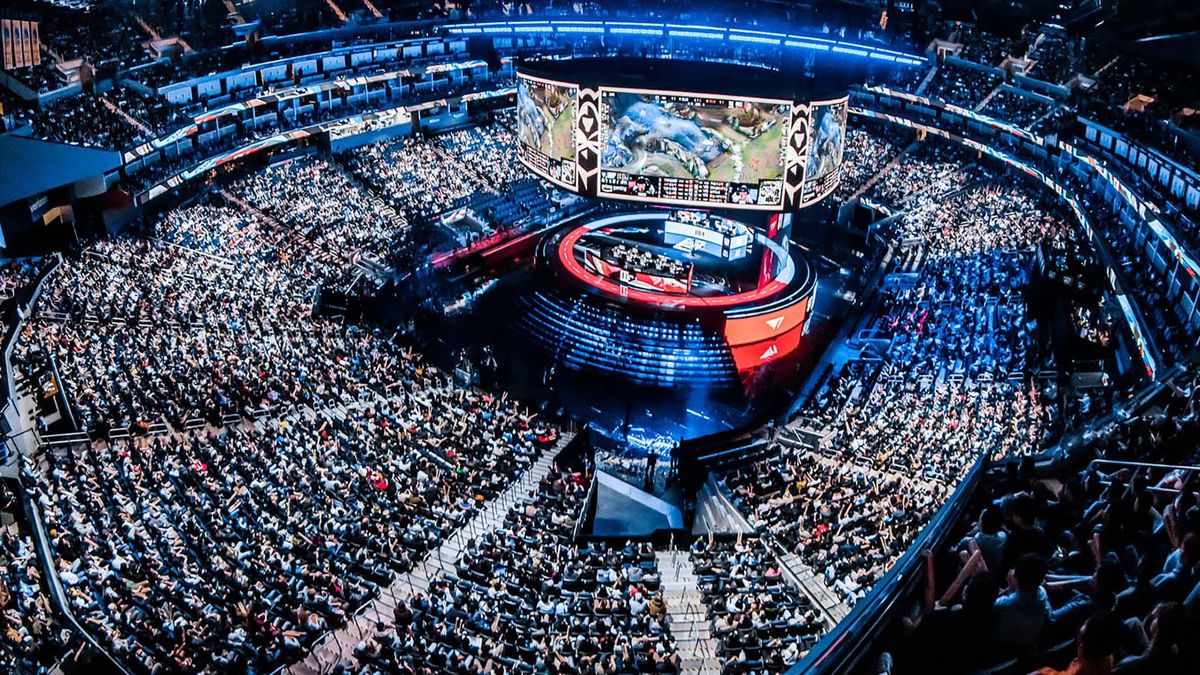
The 2021 season saw over 10,000 teams compete globally. The first Masters event in Reykjavík in May 2021 drew a peak viewership of 1,085,850. The inaugural Champions tournament was held in December at the Verti Music Hall in Berlin, concluding with Acend defeating Gambit Esports 3-2 in the grand finals. This final match reached a peak viewership of 1,089,068, setting the VCT's highest viewership record at the time. For the 2022 season, Riot streamlined the format, reducing the number of Challengers and Masters stages from three to two, though the overall three-tier structure remained. The 2022 Champions tournament was held in Istanbul, where LOUD defeated OpTic Gaming 3-1 to become world champions.
The Shift to Franchised Leagues
A major structural overhaul began in 2023, moving the VCT into a franchised era planned to run until 2027. The many regional Challengers circuits were replaced by three permanent International Leagues for the Americas, EMEA, and Pacific. On September 21, 2022, Riot announced the thirty teams selected as partners for these leagues, with ten teams per region. These leagues became the primary domestic competitions to qualify for Masters and Champions. Teams played on LAN in centralized locations: the Riot Games Arena in Los Angeles for Americas, a Riot Games Arena in Berlin for EMEA, and the Sangam SOOP Colosseum in Seoul for Pacific.
In February 2023, Riot also partnered with Grid Esports for performance analysis data. A separate China League was added in 2024 after the game, titled 无畏契约 (Fearless Contract), was officially licensed for release in mainland China in July 2023. This raised the total number of partnered teams to 40. Riot had shown favor to Chinese players even before the official launch by allowing teams to qualify for global tournaments through third-party competitions on the Hong Kong server. The VCT China League was initially centralized in Shanghai.
The Ascension Pathway and Its Struggles
Under the franchised system, non-partnered teams were relegated to a tier 2 scene. They competed in Challengers events across 23 minor regional leagues within the three international territories to qualify for yearly Ascension tournaments. Winning an Ascension event granted a team a temporary promotion into their region's International League. The original plan was for promoted teams to have a two-year stay, with one team promoted each year until 2026, after which two teams would be promoted annually. The goal was to expand each International League to 14 teams by 2027.
This system quickly created significant difficulties. The path to the top tier was narrow, requiring more time and financial resources from non-partner teams. These teams did not receive the same level of support as partner teams unless they won Ascension. They faced risks of having their talent poached and struggled to maintain financial stability and competitive strength. Many were eventually forced to disband after failing in the Challengers and Ascension pathway. Criticism was directed at Riot Games from notable figures like the 2021 champion team Acend and star player TenZ for focusing primarily on tier 1 while ignoring the tier 2 scene.
In response to the growing crisis, Riot announced changes to the Ascension format in June 2024. From 2025, promoted teams would only get a one-year stay in the International League. They could retain their spot by qualifying for Champions or by finishing in their league's playoffs and then winning that year's Ascension event again. If they finished between 9th and 12th, they would be relegated. Riot also decreased the number of minor regional leagues from 23 to 15 for the 2025 season.
The Early End of Franchising and a New Open Era
The franchising system was ultimately deemed unsuitable. Although Riot Games never made an official statement on the criticisms, their subsequent actions acknowledged the problems. They decided to end the franchising era in 2026, one year earlier than originally planned. This early termination was to reassess existing partners and prepare for a completely new competitive system.
In April 2026, Riot Games announced a comprehensive format overhaul for the 2027 season, marking a return to open qualification. The new system retains a season split into three stages but removes the permanent International Leagues. All teams, including former partner teams, must compete through open qualifiers. There will no longer be a separate tier 2 system. In Stage 1 and Stage 2, the top teams from these qualifiers will compete in a new type of international event called Cups, which qualify teams for Masters and Champions.
The partnership system will switch to a two-year cycle, offering benefits like placement in a later round of open qualifiers. Crucially, non-partner teams will also receive additional financial support for sustainability. For the 2026 transition year, Ascension tournaments were not hosted. Instead, Challengers teams were given a chance to join their respective league's Stage 2 playoffs for a direct pathway to qualify for Champions.
Global Tournaments: Masters and Champions
The VCT season is built around two premier global tournaments. Valorant Masters is a biannual international event, considered the second most important tournament after Champions, similar to the Mid-Season Invitational in League of Legends. Teams must place near the top of their regional competition to qualify. Riot has held Masters events in various global cities, including announcing Shanghai as a host for a 2024 Masters event.
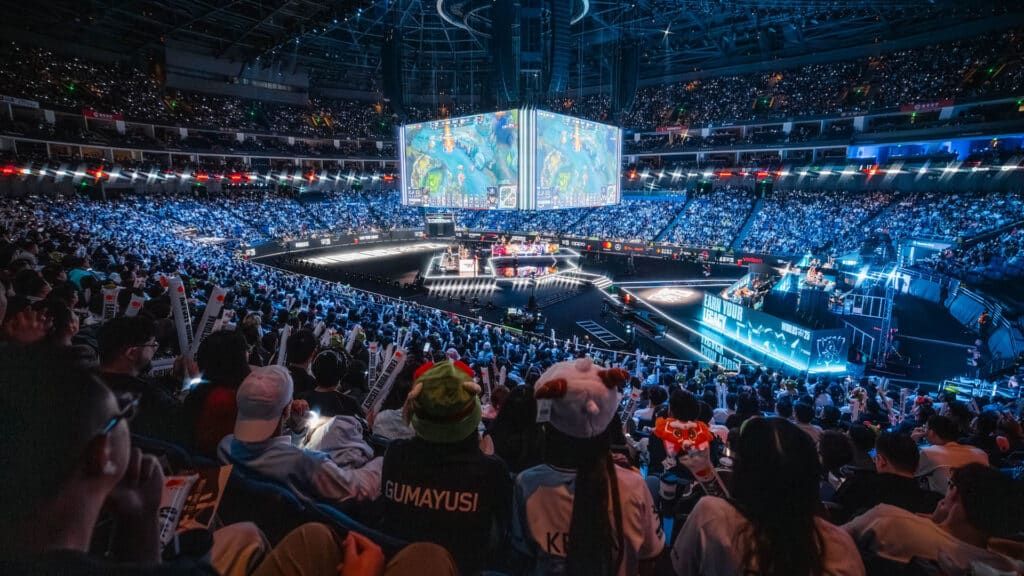
Valorant Champions is the annual world championship, the culmination of each VCT season. Teams earn spots through points accrued during the year. The 2021 event was in Berlin, the 2022 event in Istanbul, and subsequent events have continued to move to major cities around the world.
The trophies for these events are distinctive. The Masters trophy was redesigned in 2023 to be reusable, standing 18 inches tall with a swappable core themed around new game elements. For example, the Masters Tokyo trophy featured Yoru's Oni mask, Madrid featured butterflies for agent Clove, and Shanghai featured a lilac shield for agent Iso. The Champions trophy, first unveiled in 2021, is a two-foot tall, partially 3D-printed piece decorated with 24-karat gold, designed and built by Volpin Props.
The Game Changers Initiative
Alongside the main VCT, Riot Games launched the Valorant Game Changers initiative in February 2021. This is a series of domestic competitions specifically for women and other marginalized genders. The program provides a dedicated competitive pathway, with top teams qualifying for the Game Changers Championship world championship event. It also offers a promotion path into the regional Challengers leagues, serving as a vital bridge into the broader Valorant esports ecosystem and ensuring greater representation.
FAQ
What is the Valorant Champions Tour?
The Valorant Champions Tour is the global professional esports circuit for the game Valorant, organized by Riot Games. It consists of a season of competitions culminating in the Valorant Champions world championship.
What are Masters and Champions in VCT?
Valorant Masters is a biannual international tournament held during the season. Valorant Champions is the annual world championship tournament that concludes each VCT season, where teams compete for the world champion title.
What was the VCT franchising era?
From 2023 to 2026, the VCT operated with franchised International Leagues in the Americas, EMEA, Pacific, and China. Selected partner teams competed in these permanent leagues, while other teams had to qualify through Challengers and Ascension events for temporary promotion.
What is Valorant Game Changers?
Valorant Game Changers is a tournament series for women and marginalized genders. It includes domestic competitions and a world championship, and provides a pathway for teams to qualify for the broader Challengers leagues.
How is the VCT changing in 2027?
Starting in 2027, the VCT is returning to an open qualifier system. All teams must qualify through open tournaments for international Cups, which lead to Masters and Champions. The franchised leagues will be disbanded, and the partnership model will be revised to offer financial support to non-partner teams.
Source: English Wikipedia (CC BY-SA), rewritten by the Redington Cybersport desk.