Oceanic Pro League
The Oceanic Pro League was the premier professional League of Legends competition for the Oceania region. Operating from 2015 to 2020, it served as the primary pathway for Oceanic teams to qualify for major international tournaments. Its closure by Riot Games marked a significant shift for the region's esports scene.

| Founded | 2015 |
|---|---|
| Organizer | Riot Games Oceania |
| Status | Dissolved (2020) |
| Game | League of Legends |
| Region | Oceania |
| Number of teams | 8 |
| Qualified to | Mid-Season Invitational, World Championship |
| Replaced by | League of Legends Circuit Oceania (LCO) |
League Structure and Format
The Oceanic Pro League was structured as the top tier of professional League of Legends in Oceania. It operated with a consistent format of eight franchised teams competing across two splits each year. The league was directly organized and run by Riot Games through its Oceania office located in Sydney.
Each competitive season was divided into two main splits. The first split of the year culminated in a champion that earned a direct qualification spot for the international Mid-Season Invitational. The second split champion secured the region's place at the prestigious League of Legends World Championship. This format provided clear and consistent international opportunities for the region's best team.
The league had a lower division known as the Oceanic Challenger Series. This served as a developmental and promotion pathway for new talent and teams aspiring to reach the OPL. Matches and archives for both the OPL and the OCS were made available on YouTube.
Broadcast and Digital Presence
The OPL maintained a strong digital presence for its fans. All league matches were broadcast live on the popular streaming platform Twitch. Riot Games also utilized YouTube for live streaming and as an archive, where full match videos from both the OPL and its developmental league, the Oceanic Challenger Series, were available on-demand.
This dual-platform approach made the league accessible to a wide audience across Oceania and beyond. The availability of archived matches allowed fans to catch up on games they missed and provided valuable material for teams and analysts to review. The league also maintained a profile on the social media platform X, formerly known as Twitter.
Competitive History and Early Events
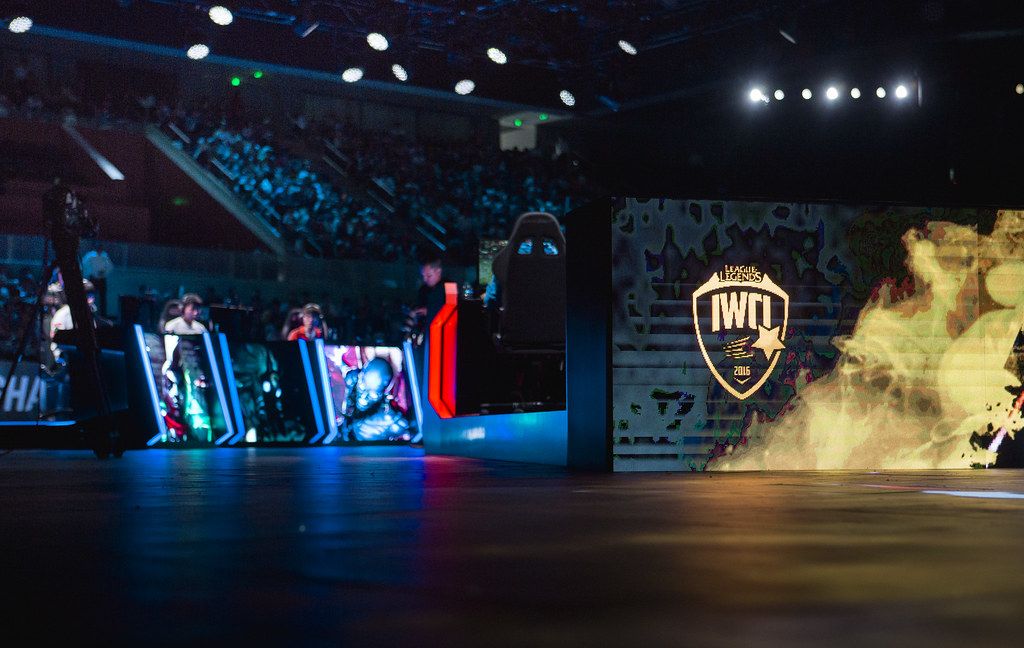
The OPL began its competitive life in 2015. The very first split playoffs for the league concluded in August 2015, featuring a prize pool of 32,000 dollars. Legacy Esports was an early dominant force, winning the OPL 2016 Split 1 title which ran from January to March of that year.
Over its five-year history, the league produced several champions who went on to represent Oceania internationally. The structure of two splits per year created a consistent rhythm of competition, with high stakes attached to each playoff finale. The winners of Split 1 headed to the Mid-Season Invitational, while the winners of Split 2 earned a spot at the World Championship.
Dissolution and Immediate Consequences
On October 7, 2020, Riot Games announced the immediate dissolution of the Oceanic Pro League. The company cited high operational costs and a failure to meet certain internal performance goals as the primary reasons for shutting down the league. The official announcement was delivered by Malte Wagener, Managing Director of North America and Oceania, and Tom Martell, Global Esports Director of Operations.
As part of this decision, Riot Games closed its Sydney office, which had been responsible for managing the OPL. This move signified a full withdrawal of direct Riot operations from the region's professional scene.
In a significant related announcement, Riot Games stated that players from Oceania would no longer be counted as import players in North America's LCS. This rule change allowed Oceanic professional players to join LCS teams without occupying one of the limited import slots, opening new career paths for the region's talent. This decision was framed as providing opportunities for OPL players following the league's end.
Legacy and Successor League
During its five-year run, the OPL established itself as the definitive professional League of Legends circuit in Oceania. It provided a structured, high-level competitive environment that helped develop local talent and fostered a professional esports ecosystem in the region. The league's winners represented Oceania on the global stage at MSI and Worlds.
The void left by the OPL was quickly addressed by other esports organizations. On December 18, 2020, ESL Australia announced plans to create a new professional League of Legends league for Oceania to begin in 2021. This new competition was later officially named the League of Legends Circuit Oceania, or LCO.
The OPL's end represented a major turning point, as control of the region's top league moved from the game's developer, Riot Games, to a third-party tournament organizer. Its successor, the LCO, continues the mission of being Oceania's premier League of Legends competition, building upon the foundation laid by the OPL. The closure was seen by many as Riot Games abandoning the region's professional structure, though the player residency rule change offered a form of compensation.
FAQ
What was the Oceanic Pro League?
The Oceanic Pro League was the top professional League of Legends competition in Oceania. It was founded in 2015 and featured eight teams competing across two splits each season, with the winners qualifying for major international events.
Why did the OPL end?
Riot Games dissolved the OPL in October 2020. The company stated the decision was due to high operational costs and the league not meeting certain company-set performance goals. This led to the closure of the Riot Games Sydney office.
What happened to OPL players after the league closed?
Riot Games announced that players from Oceania would be allowed to compete in North America's LCS without being classified as import players. This gave them new opportunities to join teams in a major region without restriction.
What replaced the Oceanic Pro League?
The Oceanic Pro League was replaced by the League of Legends Circuit Oceania. This new league was created by ESL Australia and began competition in 2021, taking over as the region's premier professional circuit.
How could fans watch OPL matches?
OPL matches were streamed live on both Twitch and YouTube. YouTube also hosted an on-demand archive of match videos from both the OPL and the lower-tier Oceanic Challenger Series developmental league.
Source: English Wikipedia (CC BY-SA), rewritten by the Redington Cybersport desk.