League of Legends EMEA Championship
The League of Legends EMEA Championship (LEC) is the premier professional esports league for League of Legends in Europe, the Middle East, and Africa. Operated by Riot Games, it features ten franchised teams competing across three annual splits for titles and qualification to major international tournaments. It represents the highest level of competitive play in the EMEA region.
| First held | 9 February 2013 |
|---|---|
| Region | EMEA (Europe, Middle East, Africa) |
| Developer | Riot Games |
| Game | League of Legends |
| Number of teams | 10 |
| Venue | Riot Games Arena, Berlin, Germany |
| Current champion | G2 Esports (most titles) |
| Prize pool | Not specified in notes |
| Broadcast | Twitch, YouTube |
| Trophy designer | DesignStudio, Thomas Lyte |
From EU LCS to EMEA Championship
The league began as the European League of Legends Championship Series (EU LCS) in 2013, marking Riot Games' move to create a fully professional, company-run league with guaranteed player salaries. It started with eight teams, with the first European games played on 9 February 2013. The top three teams from the 2012 regional championships automatically qualified, with the remaining five spots decided in qualifiers in January 2013. The league expanded to ten teams for the 2015 season following an expansion tournament.
In 2019, a major rebrand saw it become the League of Legends European Championship (LEC), coinciding with a shift to a permanent franchise model, ending promotion and relegation. This mirrored the move made by North America's LCS a year earlier. The EU Challenger Series was discontinued and replaced by the European Masters tournament for regional league teams. The most significant structural change came in 2023, when the league merged with the Turkish (TCL) and CIS (LCL) regions to form the League of Legends EMEA Championship, reflecting its expanded geographical scope across Europe, the Middle East, and Africa. Teams from those regions now qualify through the EMEA Masters circuit.
Competition Format and Evolution
The LEC season is divided into three splits: Winter, Spring, and Summer. Each split has its own format designed to qualify teams for specific international events. The Winter Split winner qualifies for the First Stand Tournament, the top two Spring Split teams go to the Mid-Season Invitational (MSI), and the top three from Summer qualify for the League of Legends World Championship. From 2023 to 2024, a Championship Points system determined qualification for a Season Finals event, but the 2025 format focuses on direct qualification through each split's results.
The format is dynamic and split-specific. The 2025 Winter Split begins with a single round-robin of best-of-one matches, with the top eight teams advancing to a double-elimination Stage 2 that uses Fearless Draft, where champions cannot be repicked in a series. The Spring Split uses a best-of-three round-robin in Stage 1, with the top six moving to a double-elimination, best-of-five Stage 2. The Summer Split starts with two groups of five in a best-of-three round-robin, with a play-in stage to determine the final teams for its six-team, double-elimination Stage 2.
The concept of Championship Points to determine World Championship qualification was introduced by Riot Games at the end of the 2014 season, based on performance across both splits and playoffs.
The Teams and a Legacy of Success
Ten franchised teams compete in the LEC. Fnatic holds a distinction as the only team to have participated in every split since the inaugural 2013 Spring Split. In terms of competitive success, G2 Esports stands above all others, having secured a record 20 champion titles within the league. G2 first entered the LCS in 2016 after winning the Challenger Series and Promotion Tournament.
The league's competitive history is marked by memorable finals in major European arenas. The 2015 Summer Finals between Fnatic and Origen in Stockholm's Hovet Arena peaked at nearly one million concurrent viewers, a record at the time. Other notable finals venues include Rotterdam Ahoy in 2016, the Tauron Arena in Kraków in 2016, the Barclaycard Arena in Hamburg in 2017, and the AccorHotel Arena in Paris in 2017. The first season, Season 3, concluded with Fnatic, Lemondogs, and Gambit Gaming as the top three finishers, all advancing to the World Championship.
A sponsorship rule change in 2015 forced several teams to rebrand and leave their parent organisations. The league's popularity has attracted sponsorships from major brands including LG UltraGear, Kia, Red Bull, and Erste Group.
Broadcast, Viewership and Cultural Impact
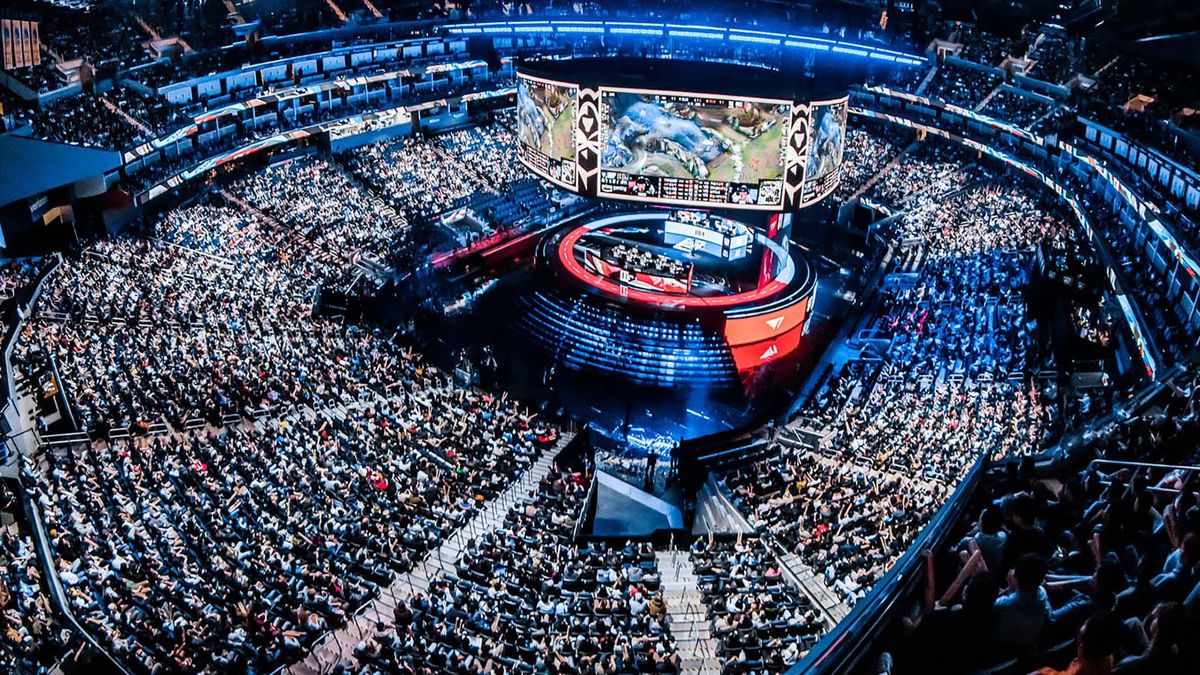
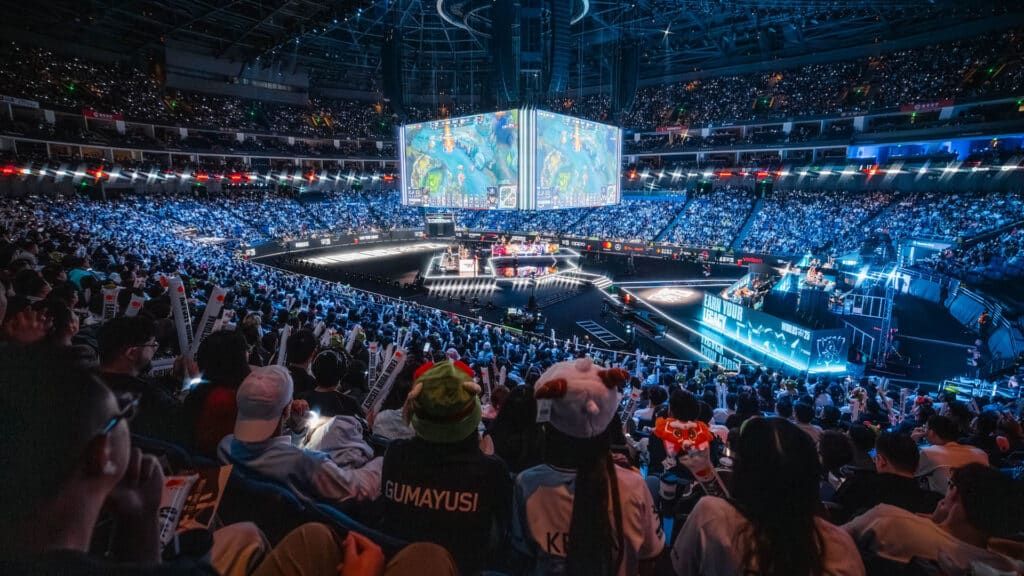
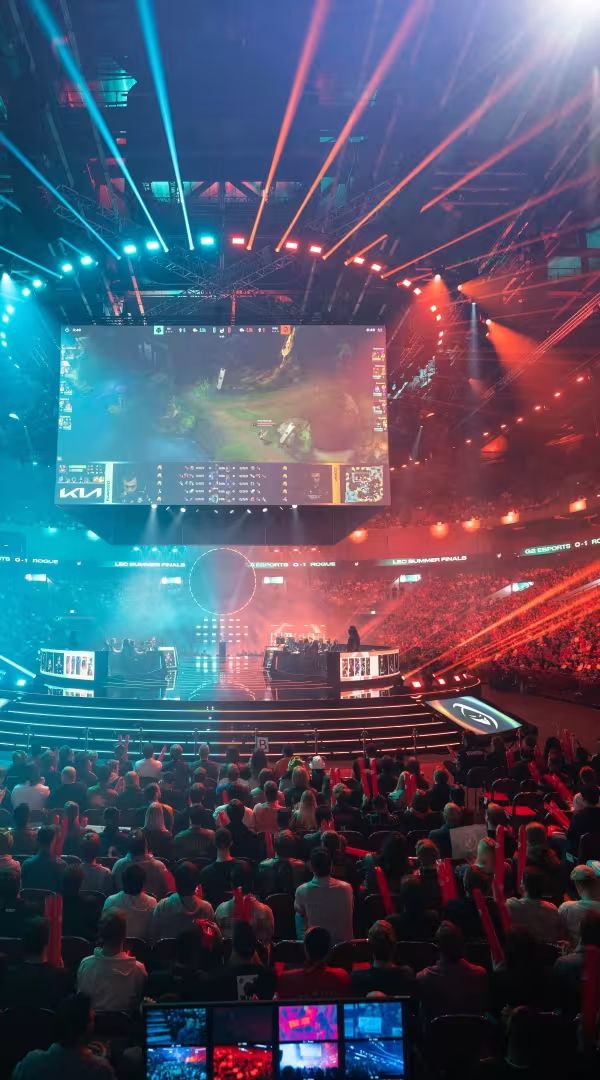
The LEC is broadcast live from the Riot Games Arena in Berlin to a global online audience. Matches are streamed on Twitch and YouTube, with regular season viewership regularly exceeding 200,000 concurrent viewers and often surpassing 300,000. The Spring 2020 finals peaked at over 817,000 consecutive viewers, and games have drawn over 1.7 million visitors. In Spring 2020, the league reached an average minute audience of over 220,000. Riot Games stated in 2012 it had no immediate plans to bring the LCS to traditional television.
The league's prominence has contributed to broader recognition for esports. In September 2016, the French Senate unanimously adopted a digital republic law that improved visa processes for players, gave a legal framework to esports contracts, ensured payment of prizes, and specified rights for minor athletes. France also established the France Esports federation to represent the industry to the government. Spain created a similar national federation in November 2016. This media and governmental attention helped legitimize the LEC as a serious competition.
The LEC Trophy
A physical symbol of the league's prestige, the LEC Trophy was commissioned in 2019. Designed by DesignStudio and crafted by the English silverware company Thomas Lyte, it stands one meter tall. Its spiraling design features ten columns, each representing one of the competing teams, with a single column rising to the top to symbolize the champion. The design was directly inspired by the tournament format and its ten teams.
Challenges and Controversies
The league's growth has not been without incident. In 2020, the LEC announced a partnership with the proposed Saudi Arabian city of Neom. Following immediate and significant backlash from the community over human rights concerns in Saudi Arabia, including the criminalization of LGBT people, the partnership was canceled the next day. Two days later, the league's Director of Esports for EMEA, Alberto Guerrero, issued a public apology, specifically addressing women, LGBTQIA+ individuals, and League of Legends players in the Middle East.
Path to the World Stage
The ultimate goal for LEC teams is to succeed on the international stage. Performance in the LEC's Summer Split is the primary route to the World Championship, with the top three teams earning slots. Success at the Mid-Season Invitational can also secure an additional seed for the region at Worlds, which would grant the fourth-place LEC team a spot. Historically, European teams like G2 Esports have found international success, with G2 finishing as runners-up at MSI in 2017 after losing to SKT T1.
The 2023 merger into the EMEA region altered the qualification paths for teams from Turkey and the CIS, who now must compete through the tier-two EMEA Masters circuit rather than receiving direct slots to international events. The LEC itself serves as the qualification route for the entire EMEA region to the First Stand Tournament, MSI, and the World Championship.
FAQ
What does LEC stand for?
LEC stands for the League of Legends EMEA Championship. From 2019 to 2022, it stood for League of Legends European Championship, and from 2013 to 2018 it was known as the European League of Legends Championship Series (EU LCS).
How many teams are in the LEC?
There are ten teams in the LEC. They are permanent franchise partners selected through a process that began in 2019, replacing the older system of promotion and relegation.
How do LEC teams qualify for the World Championship?
The top three performing teams from the LEC Summer Split qualify for the League of Legends World Championship. If the EMEA region earns an additional seed through performance at the Mid-Season Invitational, a fourth-place team may also qualify.
Where are LEC matches played?
All LEC matches are played live at the Riot Games Arena in Adlershof, Berlin, Germany. The games are broadcast with a small studio audience and streamed online to a global viewership.
Which LEC team has won the most championships?
G2 Esports is the most successful team in the league's history, having won 20 champion titles. Fnatic is the only team that has competed in every split since the league began in 2013.
Source: English Wikipedia (CC BY-SA), rewritten by the Redington Cybersport desk.