FIFAe World Cup
The FIFAe World Cup is the premier global esports competition organized by FIFA. Originally focused on the EA Sports FIFA video game series, it has evolved into a multi-game championship featuring titles like eFootball, Football Manager, and Rocket League.
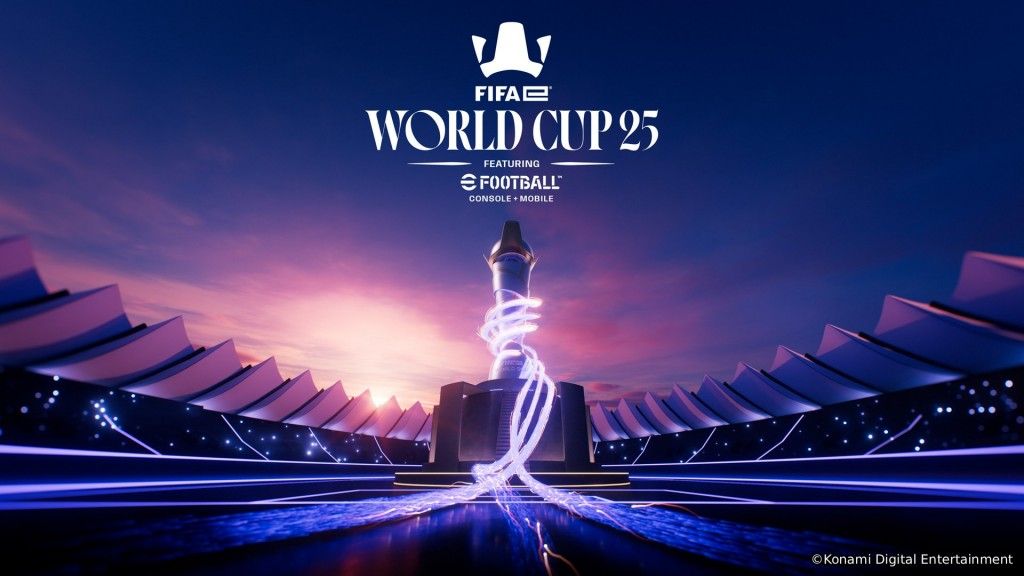
| First held | 2004 |
|---|---|
| Organizer | FIFA |
| Formerly known as | FIFA Interactive World Cup (FIWC), FIFA eWorld Cup (FeWC) |
| Games | FIFA series (2004-2023), eFootball, Football Manager, Rocket League (2024 onward) |
| Prize pool (2023 FIFA) | $300,000 to winner |
| Prize pool (2024 Football Manager) | $100,000 total |
| Format | Open online qualifiers, Grand Finals |
| Record registration | Over 2.5 million players (2013) |
| Broadcast | YouTube, Twitch, television |
A Record-Breaking Beginning
The tournament began in 2004 as the FIFA Interactive World Cup, a competition built around the EA Sports FIFA video game. Its open online qualifying format quickly made it the world's largest online esports competition, a fact certified by Guinness World Records in 2010. The record was confirmed in 2013 when over 2.5 million players registered to compete. For nearly two decades, this was the core identity of the event, crowning world champions in virtual football.
The competition grew with gaming technology. In 2015, the tournament integrated the Xbox One and PlayStation 4, allowing players from both consoles to compete against each other for the first time. This change significantly increased participation, with 2.3 million players attempting to qualify for that year's grand final in New York City. The 2016 final, won by Mohamad Al-Bacha of Denmark against England's Sean Allen at the Apollo Theater, marked the end of an era before further evolution.
The event was renamed the FIFA eWorld Cup in 2018. That year's Grand Finals were held at London's O2 Arena, featuring 32 finalists split between PlayStation 4 and Xbox One. The competition was rebranded again as the FIFAe World Cup in 2020 as part of a broader esports initiative by FIFA.
The End of an Era and a New Multi-Game Vision
A major shift occurred after the release of FIFA 23. The long-standing partnership between FIFA and EA Sports ended, with EA launching its own esports circuit called EA Sports FC Pro. Consequently, the 2023 FIFAe World Cup was the final edition to feature the FIFA video game series, with Manuel Bachoore of the Netherlands becoming the last champion under that format.
In 2024, FIFA reinvented the FIFAe World Cup as a football-focused tournament series across multiple games. On June 23, FIFA announced a Rocket League tournament consisting of national teams. Days later, on June 27, a Football Manager tournament was added, officially known as the FIFAe World Cup of Football Manager. A partnership with Konami, announced on October 10, brought eFootball into the fold. This transformed the event from a single-game championship into a festival of football esports, with separate champions now crowned in each participating title. The current champions include Ichsan Taufiq from Indonesia and Minbappe from Malaysia for Football Manager on console and mobile, and Saudi Arabia's Team Falcons for Rocket League.
Classic FIFA Tournament Format and Evolution
During its time as a FIFA game competition, qualification was primarily conducted online through the game itself on PlayStation and Xbox networks. Players could qualify via console playoffs, where the top 16 advanced, or by performing well in the FIFA Global Series tournaments throughout the season. The top 16 from the final Global Series event also earned automatic qualification.
The Grand Finals featured 32 players divided into four groups, two for each console. The top 16 moved to a knockout stage. An unusual feature was the two-legged final, with one match played on each console. The 2022 and 2023 editions, played exclusively on PlayStation 5, changed the group stage to a double round-robin format. For these final editions, 128 players were selected for the FIFA Global Series Playoffs via regional rankings and partner leagues like eMLS and the Virtual Bundesliga.
To help seed players, a FIFA Interactive World Cup World Ranking was introduced in 2016. This ranking considered both the current qualification phase and results from previous Grand Finals.
Formats for the New Multi-Game Era
The new multi-game format introduced distinct qualification paths and tournament structures for each title. For the Football Manager tournament, national associations are invited based on their active player base for that year's game. Each country then typically holds qualifiers or invites a player to represent them, with the host nation qualifying two players. The main tournament involves 20 players in a group stage where each group is assigned a random club. Players separately manage this club for three simulated seasons, scored on league position, cup results, and other duties. The top player from each group advances to semi-finals, where a fantasy draft format is used for a single-elimination bracket.
The eFootball competition invites 18 national associations based on existing tournament results and community size. Players on console or mobile must then complete three in-game rounds: winning against AI, a player-versus-player challenge, and a ranking phase. National associations then select their representatives from the leaderboard.
The Rocket League event qualifies 16 national teams based on the nationalities of players in that year's Rocket League Championship Series Majors and the size of active player bases. Players earn their spot by winning their national association's qualifiers.
Prize Money, Perks, and the Physical Trophy
The prize fund for the FIFAe World Cup has grown over time. In 2018, champion Mosaad Al Dossary won $250,000, while the runner-up received $50,000. An early perk for champions included trips to The Best FIFA Football Awards, where winners met stars like Cristiano Ronaldo and Lionel Messi. The 2015 champion, Abdulaziz Alshehri of Saudi Arabia, and 2016 champion Mohammad Al-Bacha, who talked to Marcelo Vieira and Manuel Neuer, enjoyed this experience.
The final FIFA game champion in 2023 took home $300,000. The new Football Manager tournament in 2024 features a total prize pool of $100,000. The winner receives a prestigious trophy crafted by London silversmiths Thomas Lyte. The trophy, standing 50 centimeters tall, is made from a combination of silver and gold plate.
Broadcast Growth and Professional Presentation
The FIFAe World Cup Grand Finals have always been a global broadcast event. The competition is streamed live on major platforms like YouTube and Twitch. Its television breakthrough came in 2016 when the final was broadcast in over 100 countries, including a live showing on Fox Sports 1 in the United States.
The broadcasts have featured professional presentation teams. Host Kay Murray has moderated the show, with analysis from former US footballer Alexi Lalas and content creator Spencer Carmichael-Brown. Commentary has been provided by voices like Leigh Smith and John Strong. The presentation often blends esports with real football glamour, such as when former Spanish international David Villa presented the trophy, enhancing the event's prestige and connection to the sport it simulates.
FAQ
When was the first FIFAe World Cup?
The first tournament, then called the FIFA Interactive World Cup, was held in 2004 in Switzerland.
Why did the FIFAe World Cup stop using the FIFA video game?
FIFA and EA Sports ended their licensing agreement after FIFA 23. EA now runs its own esports circuit called EA Sports FC Pro, so the FIFAe World Cup shifted to feature other football games like eFootball, Football Manager, and Rocket League.
Who was the last FIFAe World Cup champion on the FIFA game?
The last champion from the FIFA video game series was Manuel Bachoore from the Netherlands, who won the 2023 edition.
What games are in the FIFAe World Cup now?
As of 2024, the FIFAe World Cup is a multi-game series featuring tournaments in eFootball (on console and mobile), Football Manager, and Rocket League.
How do players qualify for the FIFAe World Cup?
Qualification varies by game. For Football Manager, national associations invite players or hold qualifiers. For eFootball, players complete in-game challenges. For Rocket League, players win national qualifiers to represent their country's team.
Source: English Wikipedia (CC BY-SA), rewritten by the Redington Cybersport desk.