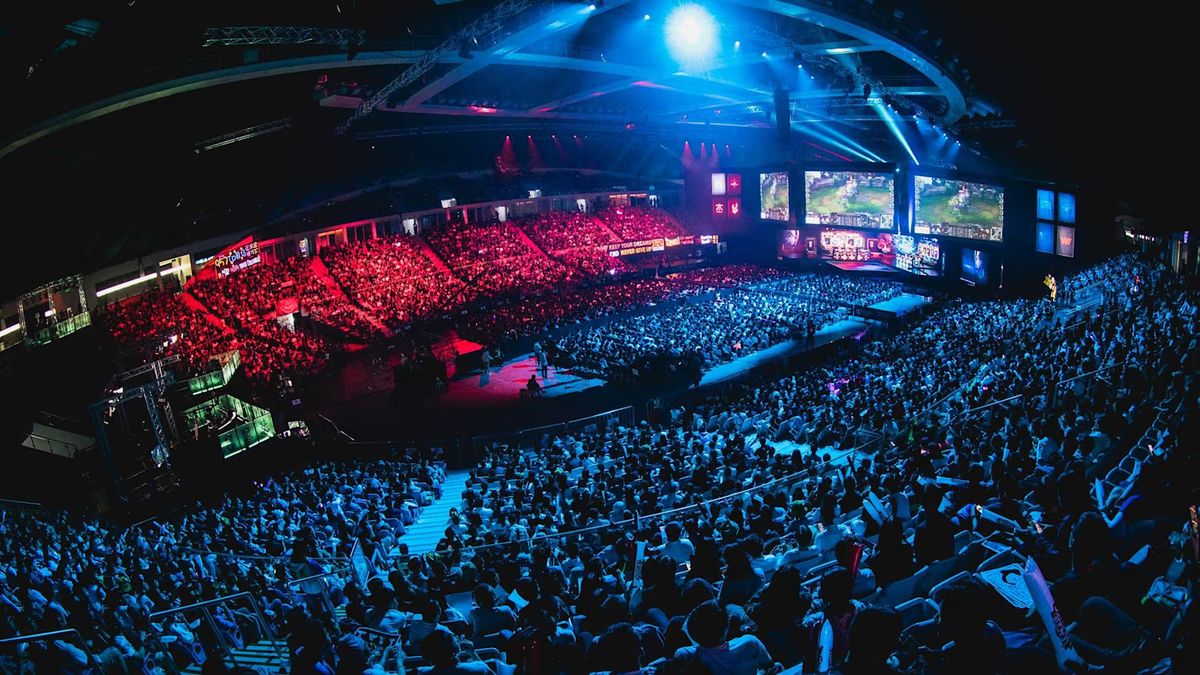
DreamHack Winter 2014
DreamHack Winter 2014 was the fourth Counter-Strike: Global Offensive Major Championship, held in Jönköping, Sweden. It is remembered as much for the crowning of a new champion as for a major competitive controversy that shook the esports world. The tournament saw Team LDLC claim its first Major title after a dramatic path through the playoffs.
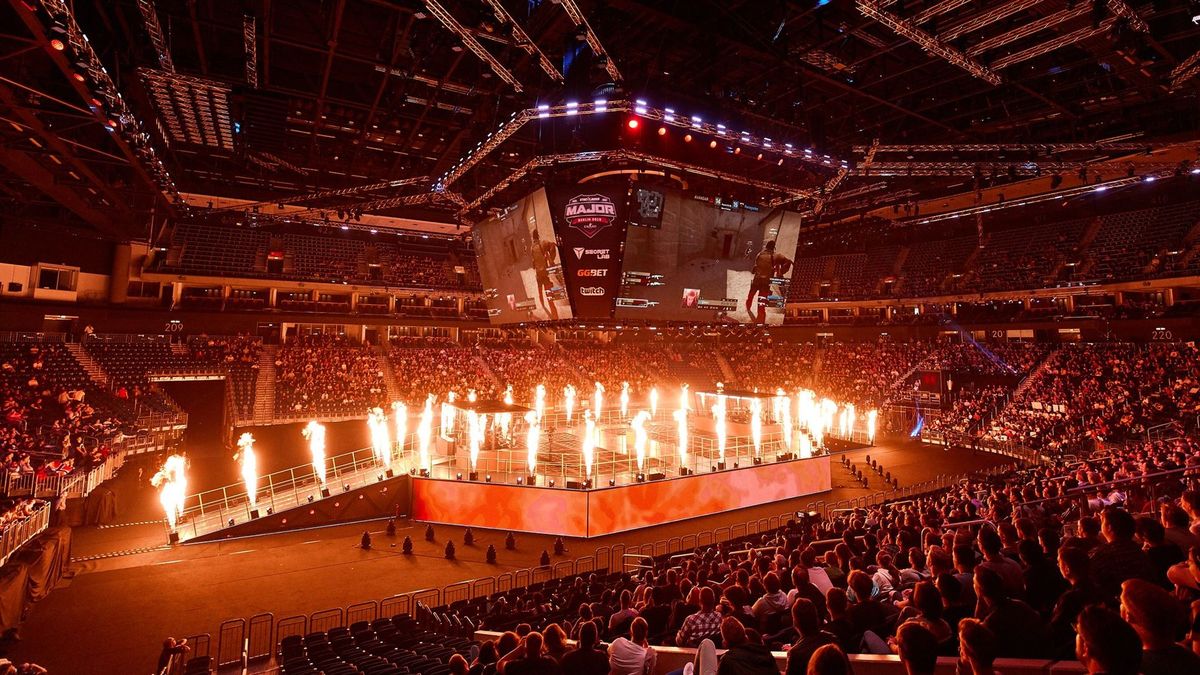
| Game | Counter-Strike: Global Offensive |
|---|---|
| First held | 2014 |
| Dates | November 27–29, 2014 |
| Location | Elmia, Jönköping |
| Organizer | DreamHack |
| Sponsor | Valve |
| Prize pool | US$250,000 |
| Format | GSL groups, single-elimination playoffs |
| Champion | Team LDLC |
| Runner-up | Ninjas in Pyjamas |
Tournament Structure and Qualification
DreamHack Winter 2014 operated as the fourth CS:GO Major, with a total prize pool of $250,000. The tournament format was designed to carry over competitive status from the previous Major. The eight quarterfinalists from ESL One Cologne 2014, known as Legends, received direct invitations to this event. However, the qualification process was thrown into disarray before the tournament began due to a cheating scandal.
Two of the Legend teams, Titan and Epsilon eSports, were disqualified after players Hovik 'KQLY' Tovmassian and Gordon 'Sf' Giry were caught cheating. These players, along with Simon 'smn' Beck, were given VAC bans by Valve and permanently barred from all Valve-sponsored tournaments. Their teams' Legend spots were taken by Copenhagen Wolves and Flipsid3 Tactics, who advanced from a newly created qualifier.
To fill the remaining ten spots for Challengers, a series of regional qualifiers were held. Five teams qualified from Europe, one from North America, and two from a special Last Call LAN Qualifier. After these qualifiers concluded, two teams were directly invited to complete the sixteen-team roster for the Major.
Group Stage and Playoff Format
The sixteen teams were divided into four groups for the initial stage. All group matches were played as best-of-one games. The format used was the GSL system, named after the Global StarCraft II League. In each group, the highest seed played the lowest seed, and the second and third seeds played each other. The winners of those matches then faced off, with the victor advancing directly to the playoff stage.
The losers of the first round of matches also played each other. The loser of that lower match was immediately eliminated from the tournament. With one team already advanced and one eliminated, the two remaining teams in the group played a final elimination match to decide the second team that would move on to the playoffs.
The playoff bracket consisted of the eight qualifying teams, two from each group. All matches in this stage were best-of-three series under a single-elimination rule. Teams progressed through the bracket until a champion was crowned. The map pool for the tournament remained the same seven maps used at ESL One Cologne 2014. In the group stage, teams banned two maps each, and the match map was randomly selected from the remaining three. In the playoffs, each team banned one map and picked one map for the series, with a potential third map chosen randomly from the leftovers.
The Quarterfinal Controversy
The most famous match of the tournament was the quarterfinal between Fnatic and Team LDLC. The teams split the first two maps, with LDLC winning on Dust II and Fnatic taking Cache. The decisive third map was played on Overpass. LDLC dominated the first half, building a 12-3 lead and then winning the first round of the second half to make the score 13-3. At this point, Fnatic player Olof 'olofmeister' Kajbjer Gustafsson performed a maneuver that would become infamous.
He used a series of boosts to reach a position that exploited an invisible pixel-walking glitch on the map. This placed him on a ledge outside the intended playable area. From this spot, he could see a large portion of the map and shoot from a position where he was very difficult to spot. Using this advantage, Fnatic won the next thirteen rounds in a row without a reply from LDLC, completing a 16-13 comeback to win the map and the series on paper.
Community Backlash and Forfeit
Immediately after the match, Fnatic coach Jonatan 'Devilwalk' Lundberg revealed in an interview that the team had been practicing the boost strategy for two months prior to the Major. LDLC filed a formal protest with the tournament organizer, DreamHack, arguing that Fnatic had used an illegal pixel-walk on geometry not meant for players. The professional community reacted strongly. LDLC player Nathan 'NBK' Schmidt said the CS:GO scene would turn into a joke if Fnatic were not disqualified. The other semifinalists, Ninjas in Pyjamas and Virtus.pro, publicly supported LDLC, with Virtus.pro tweeting that Fnatic had no respect for the fans.
DreamHack reviewed the protest and initially ruled that the second half of the Overpass map should be replayed. Fnatic then lodged a counter-protest, pointing out that LDLC had also used a pixelwalk during the match, though with less impact. In response, DreamHack ordered the entire map to be replayed from the beginning. Faced with this decision and the intense criticism from fans and peers, Fnatic made a historic choice. They decided to forfeit the map and the match, withdrawing from the tournament entirely. This was the first time a team had forfeited a match in the history of CS:GO Majors.
LDLC's Championship Run
By accepting the forfeit, Team LDLC advanced to the semifinals. There, they faced Natus Vincere and secured a 2-0 victory to move on to the grand final. Their opponent was Ninjas in Pyjamas, the defending Major champions from ESL One Cologne 2014. NiP was also making its fourth consecutive appearance in a Major final, a record at the time. For Team LDLC, it was a milestone as the first French team to ever reach a CS:GO Major final.
The final was a best-of-three series cast by Anders Blume and Semmler. Team LDLC emerged victorious with a 2-1 scoreline, claiming the organization's first and only Major championship. The victory was a major achievement for French Counter-Strike, though the path to the title was forever linked to the controversy in the quarterfinals.
Lasting Impact and Changes
The fallout from the Olofboost incident extended far beyond the tournament. Valve, the game's developer and Major sponsor, took direct action. Soon after DreamHack Winter concluded, Valve released a patch for the Overpass map that removed the specific pixel-walk exploit used in the match. As a permanent and humorous reminder, the developers placed a sign on the map below where the incident happened. The sign read 'Geländer übersteigen verboten!', which is German for 'Climbing over railings prohibited!'.
The personal and professional consequences for Fnatic were significant. In later reflections featured in documentaries like Red Bull Gaming's 'Memories of CS:GO', coach Devilwalk stated that the team felt completely isolated from the rest of the professional Counter-Strike scene after the controversy. Olofmeister himself said in an interview that he was very close to quitting the game because of the backlash. Despite this severe setback, Fnatic as an organization would show resilience. They went on to win the next two Majors in 2015, ESL One Katowice and ESL One Cologne, becoming the first organization to win multiple Majors and the first to win two in a row.
Broadcast Team
The event was presented by a dedicated broadcast team. Scott 'SirScoots' Smith served as the overall host for the stream, while James Duffield was the stage host interacting with players and the live audience. Analysis and deeper insights were provided by Duncan 'Thorin' Shields. The commentary, which captured all the dramatic moments of the group stage and playoffs, was handled by a team of four. Auguste 'Semmler' Massonnat and Anders Blume formed one casting duo, while Stuart 'TosspoT' Saw and Robin 'Fifflaren' Johansson formed the other, calling the matches throughout the tournament.
FAQ
What was the Olofboost at DreamHack Winter 2014?
The Olofboost was a controversial play where Fnatic player olofmeister used an invisible pixel-walking glitch on the map Overpass. This allowed him to boost to an unintended position on a ledge, giving him a significant tactical advantage during a quarterfinal match against Team LDLC.
Why did Fnatic forfeit the match against LDLC?
After DreamHack ordered a full replay of the controversial map and following intense backlash from the community and other professional teams, Fnatic chose to forfeit the match. This allowed LDLC to advance and marked the first forfeit in the history of CS:GO Majors.
Who won DreamHack Winter 2014?
Team LDLC won DreamHack Winter 2014. They advanced to the final after Fnatic's forfeit and defeated Ninjas in Pyjamas 2-1 in the grand final, claiming their first Major championship.
How did Valve respond to the pixel-walk controversy?
Valve released a patch after the tournament that removed the pixel-walk exploit from the Overpass map. They also added a humorous sign in German that said 'Climbing over railings prohibited' near the location where the controversial boost occurred.
Which teams lost their invites due to cheating before the event?
Two teams lost their direct Legend invites due to cheating scandals. Titan was disqualified after Hovik 'KQLY' Tovmassian was caught cheating, and Epsilon eSports was disqualified after Gordon 'Sf' Giry was found cheating. Their spots were given to Copenhagen Wolves and Flipsid3 Tactics.
Source: English Wikipedia (CC BY-SA), rewritten by the Redington Cybersport desk.