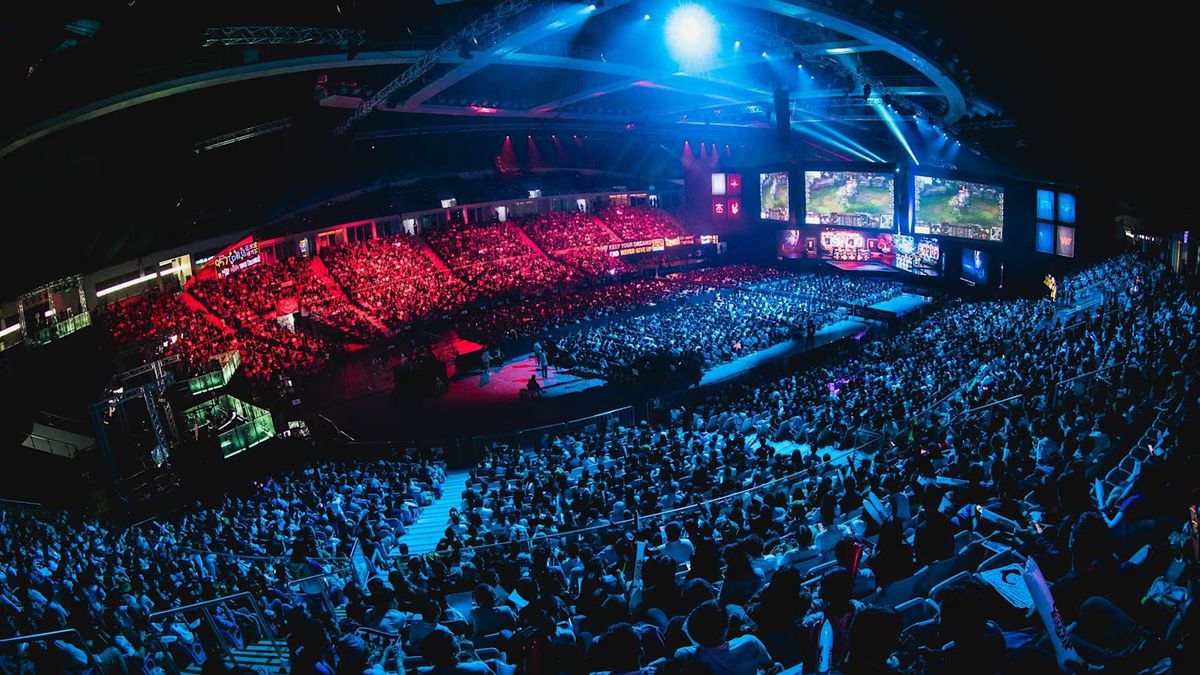
Halite AI Programming Competition
The Halite AI Programming Competition is an annual open-source contest where participants build autonomous bots to battle for control on a virtual grid. Created by the financial technology firm Two Sigma, it serves as a global platform for programmers of all skill levels to test their artificial intelligence and algorithmic strategies. The competition has attracted thousands of participants, from high school students to professional engineers, making it a significant event in the programming challenge landscape.
| First held | November 2016 (Halite I) |
|---|---|
| Developer / Organizer | Two Sigma (in partnership with Cornell Tech) |
| Platform | Google Cloud Platform |
| Game Type | Multi-player turn-based strategy on a square grid |
| Typical Duration | October/November to January/February |
| Languages Supported | More than 20 programming languages |
| Notable Participant Count | Over 15,000 total participants across all editions |
| Prize | Not specified in notes |
Origins and Philosophy
The Halite competition began as an internal project at Two Sigma in 2016, created by summer interns Benjamin Spector and Michael Truell. The firm, known for its data-driven approach, sought to extend the spirit of its internal programming contests, like a 2016 robotic air hockey challenge, to a global audience. The core philosophy was to create an accessible and engaging gateway into artificial intelligence and machine learning. A simple bot could be built with just ten lines of code, lowering the barrier to entry, while the strategic depth of the game rewarded creativity and sophisticated algorithmic thinking over mere complexity. Two Sigma stated that the goal was to provide an accessible way for participants to engage with these technical fields.
To manage its public launch later in 2016, Two Sigma partnered with Cornell Tech, an institution noted for its innovative, hands-on approach to bridging academia and industry. This partnership provided community management and technical support throughout the multi-month competition periods. Halite was released as a free, open-source project, encouraging widespread participation and community contribution to its development. The code is licensed as open-source, allowing anyone to examine and build upon the game environment.
Gameplay and Technical Framework
Halite is a turn-based, multi-player strategy game played on a two-dimensional square grid. Participants write software agents, or bots, to compete autonomously in an original multi-player game. The objective varies slightly between iterations but consistently involves strategic resource management and territorial control. In early versions, bots aimed to conquer grid cells, using their strength to gain territory and their territory to generate more strength. The game is described as a battle where bots aim to take over the largest share of a virtual grid. Halite III introduced an ocean theme where the primary resource to collect and manage was named Halite, functioning as an energy currency for the bots.
The competition's infrastructure is deployed on Google Cloud Platform, ensuring scalability for thousands of simultaneous matches. By the time of Halite III, the supporting tools and application programming interfaces allowed developers to write their bots in more than twenty different programming languages, from Python and Java to more niche options. This flexibility was a key feature, allowing programmers to use the language they were most comfortable with or wanted to learn. The game environment and all necessary information are made available to participants, so they can learn everything required to build their competing agent.
A Chronicle of Competitions
The first official competition, Halite I, launched in November 2016 and concluded in February 2017. It established the basic territorial conquest gameplay and attracted approximately 1,500 players. Building on this foundation, Halite II adopted a space-war theme and ran from October 2017 until January 29, 2018. This edition saw significant growth, drawing around 6,000 individual players from more than 100 countries. The participant pool was notably diverse, including high school and university students, professors, physicists, and NASA engineers, competing directly against professional software developers.
Halite III launched in mid-October 2018 and ran until January 2019. Its ocean-themed playing field, where players collected and managed the Halite energy resource, engaged more than 4,000 players and 460 organizations by the competition's end. The competition then moved to the Kaggle platform for Halite IV, which launched in mid-June 2020, indicating an adaptation in hosting strategy. The annual cadence, typically starting in the fall, became a fixture for the programming community, with some iterations described as running for about three months.
Notable Participants and Results
Halite competitions have consistently demonstrated that skill, not professional background, determines success. The results from Halite II are a prime example. The 2018 champion was a competitor using the username reCurs3, who worked at the video game company Ubisoft in Montreal. Second place was secured by FakePsyho, a Polish puzzle-competition champion employed at the research laboratory OpenAI. Third place went to shummie, an actuary based in Chicago at the insurance company Allstate.
Organizers highlighted that college and even high school students regularly placed competitively alongside these professional software developers and researchers. This mix of backgrounds underscored the competition's goal of being an inclusive proving ground for algorithmic ideas, where a clever insight could triumph over extensive professional experience. The contest proves that it is not always the most complicated algorithm that wins, but rather creativity and insight that are highly rewarded.
Infrastructure and Global Reach
The technical backbone of Halite is Google Cloud Platform, which handles the deployment and execution of countless bot matches. Two Sigma created Halite to extend the spirit of its internal programming competitions to the wider community. The firm's internal events, such as the robotic air hockey challenge, inspired this outward-facing project. The platform supports both public global leaderboards and private leaderboards. These private leaderboards allow schools, clubs, companies, and other groups to host internal contests and measure themselves against peers, facilitating local competition and learning.
This structure has helped Halite achieve a global reach, with more than 15,000 people around the world having participated in a challenge by the time of later iterations. Participants apply advanced algorithms in a dynamic environment, and the competition is designed for all levels of coding enthusiasts. The partnership with Cornell Tech was crucial for community management and providing ongoing game support during the competition periods, ensuring a smooth experience for this large and diverse participant base.
Educational Impact and Legacy
Halite functions as a significant educational tool in the fields of artificial intelligence and competitive programming. By making advanced concepts in AI and strategic algorithm design accessible and fun, it has introduced many to machine learning principles. The simplest Halite bot requires only 10 lines of code, providing an immediate point of entry. From there, participants can explore increasingly sophisticated strategies, learning about pathfinding, resource allocation, and opponent modeling in a practical, game-based setting.
The competition's legacy is evident in its sustained growth and the professional diversity of its top performers. It stands alongside other notable computer science awards and competitive programming events as a respected challenge. As an open-source project, its codebase continues to be available for study and modification, encouraging ongoing innovation beyond the official competition windows. Halite successfully bridged the gap between academic exercise and engaging competition, fulfilling Two Sigma's goal of creating an accessible community challenge.
FAQ
What is the Halite AI Programming Competition?
Halite is an annual open-source artificial intelligence programming challenge where participants build autonomous bots to compete in a turn-based strategy game on a virtual grid. It was created by Two Sigma to provide an accessible way for people to engage with AI and machine learning concepts through a fun, battle-based game environment.
Who created Halite?
Halite was initially created in 2016 by Two Sigma summer interns Benjamin Spector and Michael Truell. The financial technology firm Two Sigma later partnered with Cornell Tech to manage the public launch and ongoing community support for the competition, with Cornell Tech handling community management and game support.
What programming languages can be used in Halite?
Participants can write their bots in a wide variety of programming languages. By the time of Halite III, the competition's tooling officially supported development in more than twenty different languages, allowing coders to use their preferred tools to control their bot.
When does the Halite competition typically take place?
The competition has historically run for several months, often launching in October or November and concluding in January or February of the following year. For example, Halite II ran from October 2017 to January 2018, and Halite III ran from October 2018 to January 2019. Some iterations have also launched in mid-year, like Halite IV in June 2020.
Who can participate in Halite?
Halite is designed for coders of all skill levels, from high school students to senior professional engineers. The competition has attracted professors, physicists, NASA engineers, software developers, and students, with simple bots requiring only basic code to start. Organizers noted that students often compete successfully against professional entrants.
Source: English Wikipedia (CC BY-SA), rewritten by the Redington Cybersport desk.