GT Academy
GT Academy was a television program and competition that ran from 2008 to 2016, offering skilled Gran Turismo video game players a direct pathway to a professional racing career with Nissan. Conceived as a 'Gamer to Racer' initiative, it represented a partnership between Sony Interactive Entertainment and Nissan, blending virtual competition with real-world motorsport. Over its lifespan, it tested over five million entrants and successfully transitioned 23 gamers into professional racing drivers who competed at the top levels of international motorsport.
| Also known as | Nissan PlayStation GT Academy, NISMO PlayStation GT Academy |
|---|---|
| Founded | 2008 |
| Last held | 2016 |
| Founder/Conceiver | Darren Cox |
| Developed for TV by | Executive Producers Andrew Hill and Rabin Mukerjea |
| Game | Gran Turismo series (primarily Gran Turismo 5 & 6) |
| Platform | PlayStation 3 |
| Total entrants (approx.) | Over 5 million |
| Total graduates | 23 |
| Key prize | Professional racing contract and development with Nissan |
Origins and History
The concept for GT Academy was born in 2006 from the mind of Nissan Europe executive Darren Cox. After observing the speed and aptitude of skilled Gran Turismo players during a small promotional event with Sony, Cox developed the 'Gamer to Racer' idea. This concept fully materialized in 2008 with the official founding of the Nissan GT Academy as a joint venture between Sony and Nissan, named after the popular Gran Turismo video game series.
The inaugural competition in 2008 was won by Spain's Lucas Ordóñez, whose subsequent strong performance in the 2009 Dubai 24 Hours earned him a place on Nissan's works racing team, validating the program's core premise. The academy expanded rapidly, reaching 17 countries by 2010 and launching in the United States in 2011, where Bryan Heitkotter became the first non-European winner. To broaden access, live qualifying events were introduced in 2012 for those without a PlayStation 3 or the game.
By its peak in the mid-2010s, GT Academy had become a global phenomenon with competitions segmented into regional groups like GT Academy Europe, GT Academy Asia, and GT Academy International, encompassing countries from Japan and India to Mexico and South Africa. The program's cultural impact was later confirmed with the release of the 2023 dramatic film Gran Turismo, which featured a fictionalized account of the academy and graduate Jann Mardenborough, with Darren Cox portrayed by actor Orlando Bloom.
Competition Format and Phases
The GT Academy competition was a multi-stage elimination process designed to identify gamers with genuine racing potential. Developed for television, the format progressed contestants from virtual racing to real-world track action through several distinct phases, each with increasing intensity and scrutiny.
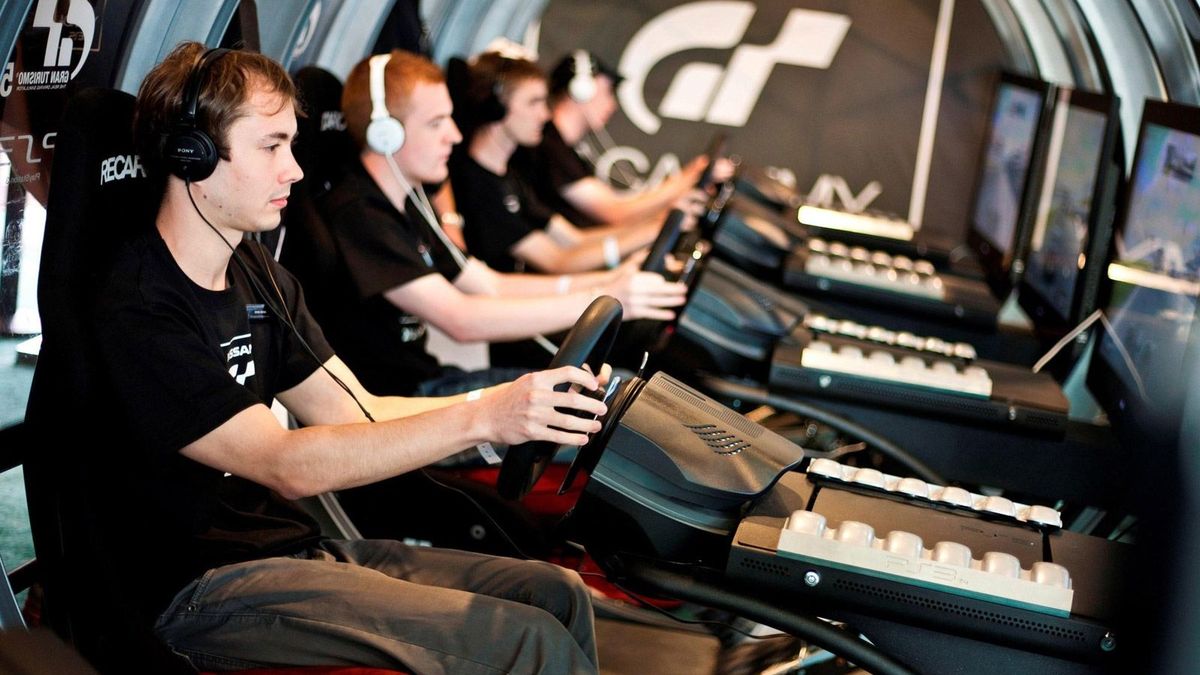
The first phase was Online Qualification. Participants in eligible territories used their PlayStation Network ID to access special time trial events via a free update for Gran Turismo 6 on PlayStation 3. They competed to set the fastest lap times across four rounds with different Nissan cars and tracks. Alternatively, gamers could attend Live Events at public venues like motor shows, where they could qualify on provided gaming pods, with the fastest earning a spot in the next round.
Successful qualifiers then advanced to the National Finals in their home country. This phase combined further Gran Turismo 6 time trials with initial assessments of real driving ability in Nissan vehicles. Contestants also underwent personality tests and evaluations of their physical fitness, vision, and general health to gauge their overall suitability for a professional racing environment.
The most demanding phase was Race Camp, a week-long boot camp held at the Silverstone Circuit complex in the United Kingdom. Winners from each National Final were grouped by region and assigned a professional racing judge as a mentor. They faced a series of on-track and off-track elimination challenges. On-track tests included gymkhana, dogfight races, stock car racing, and traffic challenges using a variety of vehicles from buggies and Caterhams to Nissan models like the 370Z and GT-R. Off-track challenges ranged from assault courses and triathlons to laser challenges and interviews. The final day saw the last remaining competitor from each group race in a final event, with judges considering both the race result and the driver's overall development throughout the camp to crown the GT Academy Winner.
The Driver Development Program
Winning GT Academy was just the beginning. The champion then entered Nissan's intensive Driver Development Programme, headquartered at Silverstone. This program was designed to compress years of traditional racing development into a matter of months. Lasting two to four months, it involved training and competing at club and national level races with the GT Academy Nissan RJN Motorsport team, with the goal of earning an International Racing License, a process that normally takes about three years.
The training was comprehensive. Alongside actual seat time in race cars, drivers used simulators like rFactor 2 for practice. A key component was training in the NISMO Lab, which employed advanced technology to hone a driver's physical and mental edge. This included Nissan's In-Body machine for body composition analysis, a brainwave monitor to train focus and relaxation, a BATAK console to improve peripheral vision and reaction times, and biometric harnesses for detailed performance measurement. This scientific approach prepared graduates for their ultimate prize, which for most was a seat in an international endurance race like the Dubai 24 Hours.
Notable Graduates and Racing Success
From over five million entrants, GT Academy produced 23 professional racing drivers, known as NISMO Athletes, who achieved significant success across global motorsport. The trail was blazed by inaugural winner Lucas Ordóñez, who finished second in the LM P2 class at the prestigious 24 Hours of Le Mans in 2011 and returned to podium in 2013 alongside 2011 European winner Jann Mardenborough.
Graduates competed and won in a wide array of series, including the Blancpain Endurance Series, where Jordan Tresson won the GT4 class in 2011 and Wolfgang Reip became a Pro Cup champion in 2015. The program's greatest collective achievement came in February 2015, when graduates Wolfgang Reip (2012) and Florian Strauss (2013), teamed with professional driver Katsumasa Chiyo, won the grueling Bathurst 12 Hour race in Australia driving a Nissan GT-R Nismo GT3.
Graduates also reached diverse racing disciplines. Jann Mardenborough's success led him to race in the GP3 Series and be named one of the world's 50 most marketable athletes in 2015. Nicolas Hammann became the first graduate to compete in NASCAR's Xfinity Series. In 2016, Wolfgang Reip made history as the first graduate to sign a professional contract with another manufacturer, joining Bentley Motorsport. The graduates' performances proved the academy's concept, with many becoming regular contenders in series like Super GT, the FIA World Endurance Championship, and the British GT Championship.
Legacy and Recognition
GT Academy's innovative blend of esports and professional motorsport left a lasting legacy. It demonstrated that elite-level sim racing skills could be successfully translated to real-world track performance with the right structured training and support. The program received widespread acclaim within both the advertising and motorsport industries for its pioneering approach.
This recognition included multiple prestigious awards. At the Cannes Lions International Festival of Creativity, GT Academy won a Gold Lion in 2011 and a Bronze Lion in 2012 for Best Use of Branded Content. It also won Best Transport Campaign and Best Media and Entertainment Campaign at the 2011 Campaign magazine Media Awards. In the motorsport world, it received the Pioneering and Innovation Award at the 2013 AUTOSPORT Awards. By creating a viable new talent pathway and capturing the public's imagination, GT Academy remains a landmark experiment in the convergence of gaming and professional sport.
FAQ
What was the GT Academy?
GT Academy was a television program and competition, run from 2008 to 2016, that offered skilled players of the Gran Turismo video games a chance to win a professional racing contract with Nissan. It was a joint venture between Sony Interactive Entertainment and Nissan designed to find real racing talent in the virtual world.
How did you enter GT Academy?
Entrants had to be over 18 with a valid driver's license and no high-level racing license. They initially qualified by setting fast lap times in special time trial events on Gran Turismo 5 or Gran Turismo 6 on PlayStation 3. Later, live events at public venues also allowed people without the game or console to qualify.
Where was the GT Academy Race Camp held?
The final selection stage, known as Race Camp, was always held at the Silverstone Circuit complex in the United Kingdom. Contestants lived and trained there for a week, undergoing various on-track and off-track challenges to determine the ultimate winner.
Who was the first winner of GT Academy?
The first GT Academy winner was Lucas Ordóñez from Spain in 2008. His successful transition to real racing, including a strong performance at the 2009 Dubai 24 Hours, helped prove the concept and led to future winners.
How many gamers became racers through GT Academy?
Over the course of the program, which tested more than five million entrants, a total of 23 video gamers were successfully developed into professional racing drivers. These graduates, known as NISMO Athletes, went on to compete in major international series like the 24 Hours of Le Mans, Blancpain Endurance Series, and Super GT.
Source: English Wikipedia (CC BY-SA), rewritten by the Redington Cybersport desk.