2023 League of Legends World Championship
The 2023 League of Legends World Championship was the thirteenth annual world championship for the multiplayer online battle arena game League of Legends. Hosted in South Korea, the tournament culminated with T1 claiming a record fourth world title by defeating Weibo Gaming in the final.
| Game | League of Legends |
|---|---|
| Developer | Riot Games |
| First held | 2023 (13th iteration) |
| Start Date | October 10, 2023 |
| End Date | November 19, 2023 |
| Prize Pool | $2,225,000 USD |
| Teams | 22 |
| Format | Play-Ins, Swiss, Single Elimination |
| Champion | T1 |
| Final Venue | Gocheok Sky Dome |
Format and Structural Changes
The 2023 World Championship introduced several significant format changes. The total number of competing teams was reduced from 24 to 22. This reduction was partly due to the cancellation of the LCL (CIS) league, a consequence of the ongoing Russian invasion of Ukraine, and the downgrading of the TCL (Turkey) and LCO (Oceania) leagues. The TCL became a regional league for the EMEA Masters, and the LCO was merged into the PCS, meaning teams from these regions no longer qualified directly for Worlds.
For seeding, first-seeded teams from the PCS (Asia-Pacific) and VCS (Vietnam) regions were moved to start in the play-in stage. Meanwhile, fourth-seeded teams from the top-tier LCK (South Korea) and LPL (China) leagues, and third-seeded teams from the LEC (EMEA) and LCS (North America), were promoted directly to the main event. A new Worlds Qualifying Series match was introduced, where the fourth seeds from the LEC and LCS played a best-of-five to decide the final play-in spot.
The tournament structure itself was overhauled. The play-in stage groups adopted a GSL-style double-elimination format. Most notably, the main event's first stage changed from a traditional double round-robin group stage to a Swiss system format, a first for the World Championship. This format ensured teams played opponents with identical records and introduced more best-of-three series for advancement and elimination matches.
The Worlds Qualifying Series and Play-In Stage
The tournament began with the Worlds Qualifying Series on October 9. The fourth-seeded teams from the LEC, Team BDS, and the LCS, Golden Guardians, faced off in a best-of-five series starting at 13:00 KST. The winner of this single match earned the last slot in the play-in stage, marking a new gateway to the main competition.
The play-in stage ran from October 10 to 15. Eight teams were split into two groups of four, competing in a GSL double-elimination format where teams from the same region could not be placed together. All matches in this phase were best-of-three series, played daily starting at 16:00 KST.
Following the group matches, the qualifiers took place on October 15. In this round, the upper bracket winner of one group faced the lower bracket winner of the other group in a best-of-five series. The two winners of these cross-group qualifiers advanced to the Swiss stage, where they entered as Pool 4 teams, setting the stage for the main event.
The Swiss Stage: A New Format
Held from October 19 to 29, the Swiss stage featured 16 teams playing in a Swiss-system format across five rounds. In Round 1, matchups were seeded: Pool 1 teams played against Pool 4 teams, and Pool 2 teams played against Pool 3 teams, with a rule preventing teams from the same region from facing each other initially.
From Round 2 onward, the system paired teams with identical win-loss records. Matchups were determined by a draw after each round, and from this point, teams from the same region could be drawn against each other. A rule prevented teams from being matched again if they had already played each other in a previous round, unless it was the final round where both teams had a 2-2 score.
The stakes were clear: teams needed three wins to advance to the knockout stage, and three losses meant elimination. All matches that led to advancement or elimination were played as best-of-three series, providing a more rigorous test. All other matches in the Swiss stage were best-of-one, creating a dynamic and unpredictable phase of the tournament.
Knockout Stage Drama and the Fall of the Golden Road
The knockout stage, a single-elimination bracket, ran from November 2 to 19, with all games starting at 17:00 KST. The eight qualified teams from the Swiss stage were drawn into the bracket. The two teams that achieved a perfect 3-0 record in the Swiss stage were placed on opposite sides of the bracket and were scheduled to face teams that had advanced with a 3-2 record. All other teams were seeded randomly into the remaining slots.
All matches in the knockout stage were best-of-five series, culminating in the grand final where the winning team would lift the Summoner's Cup. A major storyline was the quest of China's JD Gaming to complete the Golden Road, which entails winning all major tournaments in a season, including the domestic split, the Mid-Season Invitational, and the World Championship. Their historic run was halted in the semifinals by T1, who defeated them to advance to the final.
On the other side of the bracket, Weibo Gaming fought their way to the championship match. The defending champions from 2022, DRX, were not present to defend their title, having failed to qualify after losing to Dplus KIA in the LCK Regional Finals.
The Grand Final and a Historic Fourth Title
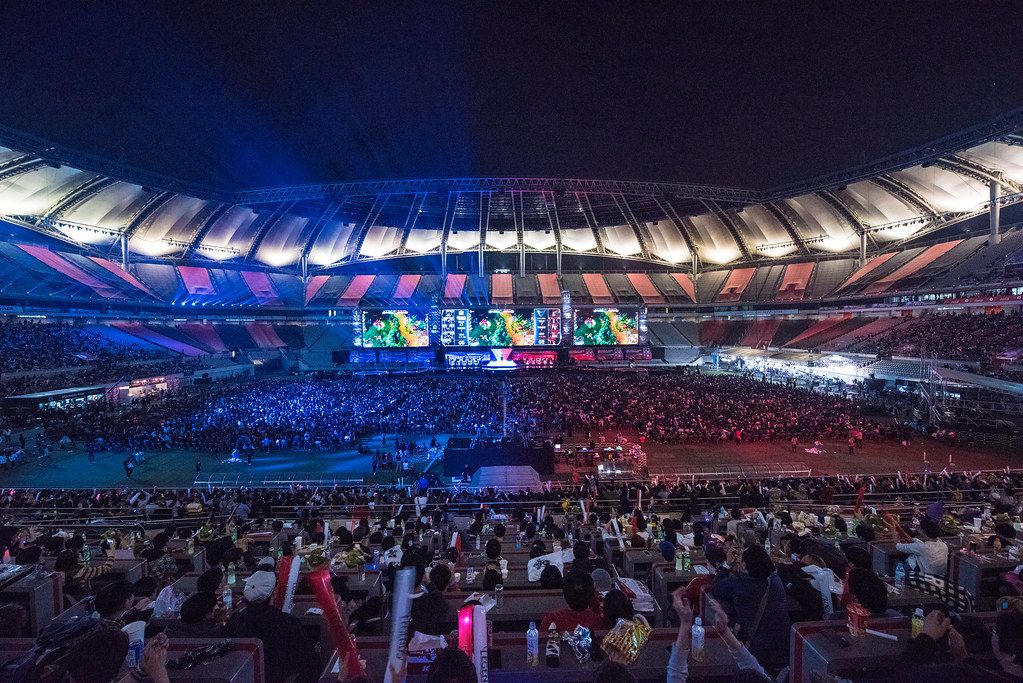
The grand final was held on November 19, 2023, at the Gocheok Sky Dome in Seoul. T1 faced Weibo Gaming in a decisive best-of-five series for the Summoner's Cup. T1 dominated the match, securing a clean 3-0 victory to claim the championship.
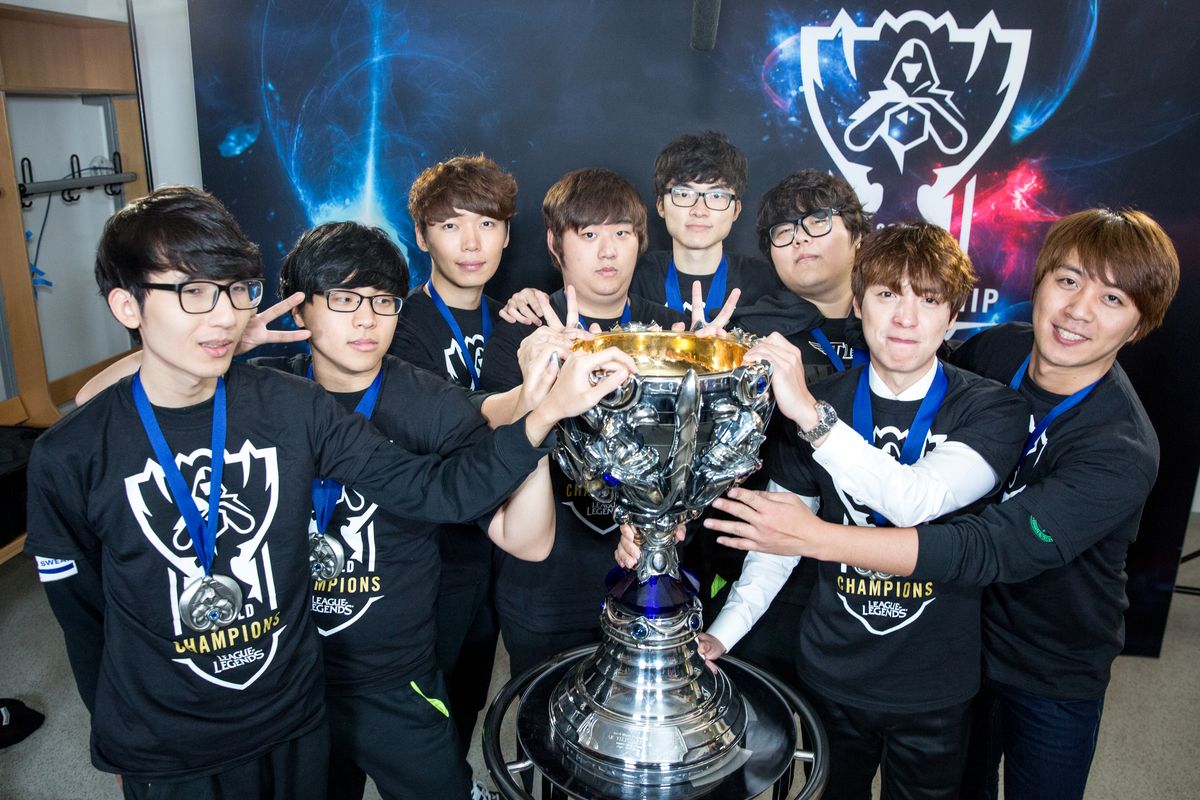
This victory marked T1's fourth World Championship title, extending their record as the most successful organization in the tournament's history. The members of the winning team earned the title of 2023 World Champions. The team received $445,000 from the total prize pool of $2,225,000.
The event also set a new global viewership record, peaking at 6.4 million concurrent viewers. This broke the all-time record for a single esports event, a figure that notably does not account for the vast viewership numbers from China, underscoring the tournament's massive global reach.
Host Nation, Venues, and Cultural Spotlight
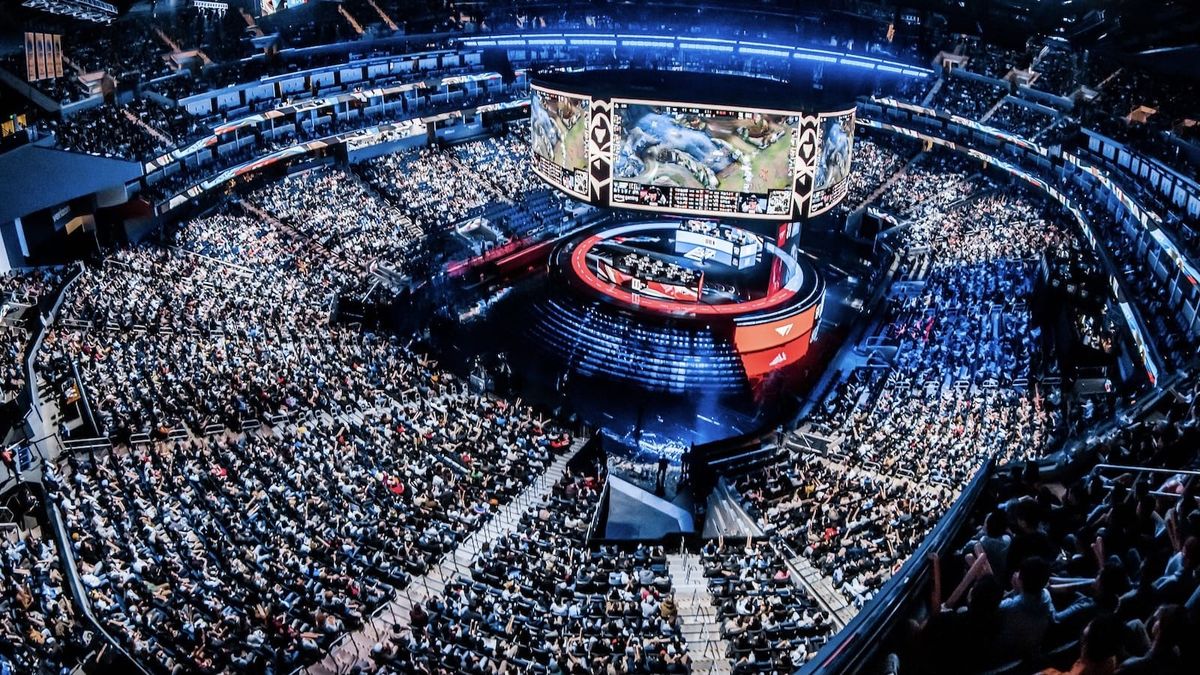
The tournament was hosted across two South Korean cities, Seoul and Busan. The play-in stage was held at LoL Park in Seoul, a venue that previously hosted the same phase during the 2018 World Championship, making it the only venue with repeat hosting duties for this tournament. The later stages moved to Busan before returning to Seoul for the final at the Gocheok Sky Dome.
The theme song for the event was Gods, performed by the popular K-pop group NewJeans. Riot Games also used the event's global platform to unveil Heartsteel, a virtual boyband. The group was represented by human artists Baekhyun from Exo and SuperM, ØZI, Tobi Lou, and Cal Scruby. These artists served as the group's human counterpart and performed their debut song, Paranoia, in a live performance during the championship festivities, blending esports with music and virtual entertainment.
FAQ
Who won the 2023 League of Legends World Championship?
T1 won the 2023 World Championship. They defeated Weibo Gaming 3-0 in the grand final held at the Gocheok Sky Dome, securing their record-extending fourth world title.
What was the prize pool for Worlds 2023?
The total prize pool for the 2023 World Championship was $2,225,000 USD. The champion team, T1, received $445,000 from this pool.
What new format was introduced at Worlds 2023?
The 2023 tournament introduced a Swiss system format for the main event's first stage, replacing the traditional double round-robin groups. The play-in stage also used a GSL-style double-elimination format.
How many teams competed in Worlds 2023?
A total of 22 teams from nine regions qualified for the 2023 World Championship. This was a decrease from the 24 teams that participated in the 2022 tournament.
What was the viewership record for Worlds 2023?
The event set a new peak concurrent viewership record for a single esports event at 6.4 million viewers. This figure does not account for viewership from China.
Source: English Wikipedia (CC BY-SA), rewritten by the Redington Cybersport desk.