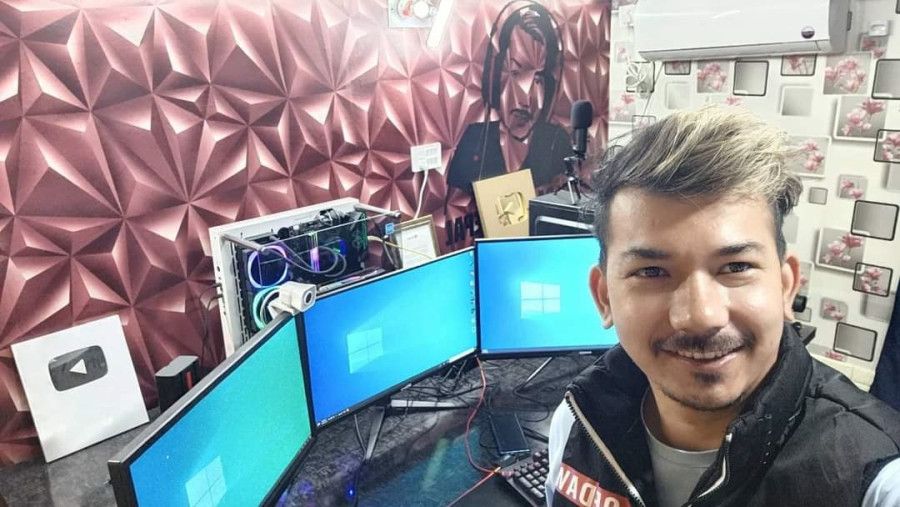
Kitboga
Kitboga is an American Twitch streamer and YouTuber who has gained widespread recognition for his innovative and entertaining approach to scam baiting. His content, which involves deceiving and wasting the time of telephone fraudsters, has built a massive online following and established him as a leading figure in public awareness efforts against scams.

| Alias | Kitboga |
|---|---|
| Nationality | American |
| Platforms | Twitch, YouTube |
| Primary Content | Scam baiting |
| Notable Tool | Bitcoin ATM maze |
| Software | Seraph Secure |
| Background | Software engineering |
Origins and Motivation
Kitboga's journey into scam baiting began in mid-2017 after learning his grandmother had been repeatedly targeted by scams. This personal connection to the impact of fraud on vulnerable people motivated him to take action. He discovered the concept of scambaiting through online videos featuring 'Lenny', a tool using pre-recorded messages to waste scammers' time. Inspired, he began replicating these calls, initially streaming just for friends on Twitch. His approach quickly resonated, and his audience grew far beyond his initial circle.
The Art of the Bait
Kitboga's scambaiting operates on multiple levels, combining technical expertise with performance art. To protect his identity and entertain viewers, he adopts a variety of characters during calls. These personas include elderly individuals, a Russian man named Vicktor Viktoor, a valley girl named Nevaeh, and even a rival scammer named Daniel. He uses voice changers and careful vocal acting to bring these characters to life. A unifying trait is that they are all portrayed as technologically inexperienced, lulling scammers into a false sense of security.
His targets are diverse, encompassing technical support, refund, IRS, and social security scams. A common thread is the scammer's request for remote access to a computer. To safely engage, Kitboga uses a separate computer running a virtual machine and a virtual private network. This setup isolates any malicious software and hides his true location. His team has worked extensively to make this virtual environment appear like a normal, well-used computer to avoid detection by savvy scammers.
For specific scam types, he employs custom-built tools. Against refund scammers who demand access to online banking, he uses a fake banking website he created. This site contains time-wasting features and hidden jokes for his audience. When dealing with gift card scams, he uses code to simulate a gift card redemption page, allowing him to 'redeem' fake codes himself while the scammer listens, effectively stealing the scammer's anticipated payout.
Cultural Impact and Memorable Moments
Kitboga's streams have generated significant online culture and memorable incidents. One of the most famous is the 'Do not redeem' meme originating from an August 2020 stream. In a marathon nine-hour call, a scammer using the alias 'Steve Watson' desperately tried to get Kitboga, playing an elderly woman named Paula, to send Google Play gift card codes. Kitboga turned the tables by pretending to redeem the cards live, prompting the scammer's frantic, repeated screams of 'Do not redeem'. This video became a viral sensation, amassing over 23 million views by September 2025.
The conclusion of his baiting calls often involves a dramatic reveal. Kitboga turns off his voice changer and informs the scammer he has been aware of the fraud all along. Reactions vary from immediate hang-ups to anger, feigned legitimacy, or even dismissive comments about other waiting victims. These moments provide both catharsis for viewers and expose the callous nature of the scamming industry.
Technological Escalation and AI
Kitboga has consistently leveraged his software engineering background to develop more sophisticated anti-scam tools. His most notable creation is the 'Bitcoin ATM maze', a fake receipt system designed to trap scammers in an endless loop of automated tasks. The receipt contains a QR code linking to a fake exchange and a hotline that leads to challenges like solving CAPTCHAs asking how many nuts are in a bucket or playing the song 'Sandstorm' on a virtual keyboard.
This system proved effective, trapping around 500 scammers for a combined total of nearly 4,000 hours over more than a year. The average scammer spent three hours in the maze, with one record session lasting six and a half days. The maze collects valuable intelligence like Bitcoin wallet addresses, which Kitboga's team shares with law enforcement and partners like the Kraken exchange to help freeze illicit funds. He considers it his best tool for gathering actionable data.
In March 2025, he publicly launched an AI bot system he had been developing for five years. These bots use generative AI to call scam operations at scale. The AI converts scammer speech to text, generates contextually relevant responses using a language model, and delivers them using AI voices trained on his characters like 'Granny Edna'. The bots can call a scam center simultaneously, occupying all its operators. He runs this operation on a separate YouTube channel called 'AI Kitboga', and the intelligence gathered feeds into his Seraph Secure software.
Beyond Baiting: Education and Software
Kitboga's mission extends beyond entertainment to education and prevention. He regularly holds programming streams where he maintains the tools used in his scams, promoting computer science. In 2018, he partnered with the STEM organization FIRST to build a real-life version of a 'meme-o-meter' from his streams, interacting with children interested in science and technology.
In 2024, he launched Seraph Secure, a comprehensive software package designed for public use. The application blocks known malware and phishing websites and disables software commonly used by scammers to gain remote computer access. This product represents a direct translation of his scambaiting experience into a proactive defense tool for everyday users.
Career Development and Philosophy
Kitboga's work has attracted professional representation, being signed by talent agency UTA in November 2020 and later by Ryan Morrison's Evolved Talent Agency in May 2022 to help expand his anti-scam messaging. He has also formed strategic partnerships, such as one with the Kraken cryptocurrency exchange in May 2023 to create spoof accounts and gather scammer wallet addresses.
His background in software engineering remains central to his work and his future outlook. He has stated that if public awareness efforts successfully decrease the prevalence of scams, he would consider returning to software engineering or shifting his stream's focus to coding or video games. This underscores that his scambaiting is ultimately a means to an end, not the end goal itself.
FAQ
What does Kitboga do?
Kitboga is a streamer and content creator who specializes in scam baiting. He pretends to be a potential victim to waste telephone scammers' time, expose their methods, and gather intelligence, all while entertaining his audience with character performances and technological tricks.
Why did Kitboga start scambaiting?
He began in mid-2017 after learning his grandmother had fallen victim to numerous scams targeting the elderly. This personal experience motivated him to take action against fraudsters, leading him to replicate scambaiting techniques he saw online.
What is the 'Do not redeem' meme?
It is a popular meme originating from a August 2020 stream where a scammer spent nine hours trying to get Google Play gift cards from Kitboga. Kitboga pretended to redeem the cards, causing the scammer to scream 'Do not redeem' repeatedly. The video has tens of millions of views.
What is Kitboga's Bitcoin ATM maze?
It is a fake Bitcoin ATM receipt system he created to trap scammers. It leads them into an automated phone maze with time-wasting challenges, collecting their data like wallet addresses. It trapped about 500 scammers for a total of nearly 4,000 hours.
What is Seraph Secure?
Seraph Secure is anti-scam software launched by Kitboga in 2024. It is designed to block known malware and phishing websites and disable software commonly used by scammers to remotely access a user's computer.
Source: English Wikipedia (CC BY-SA), rewritten by the Redington Cybersport desk.