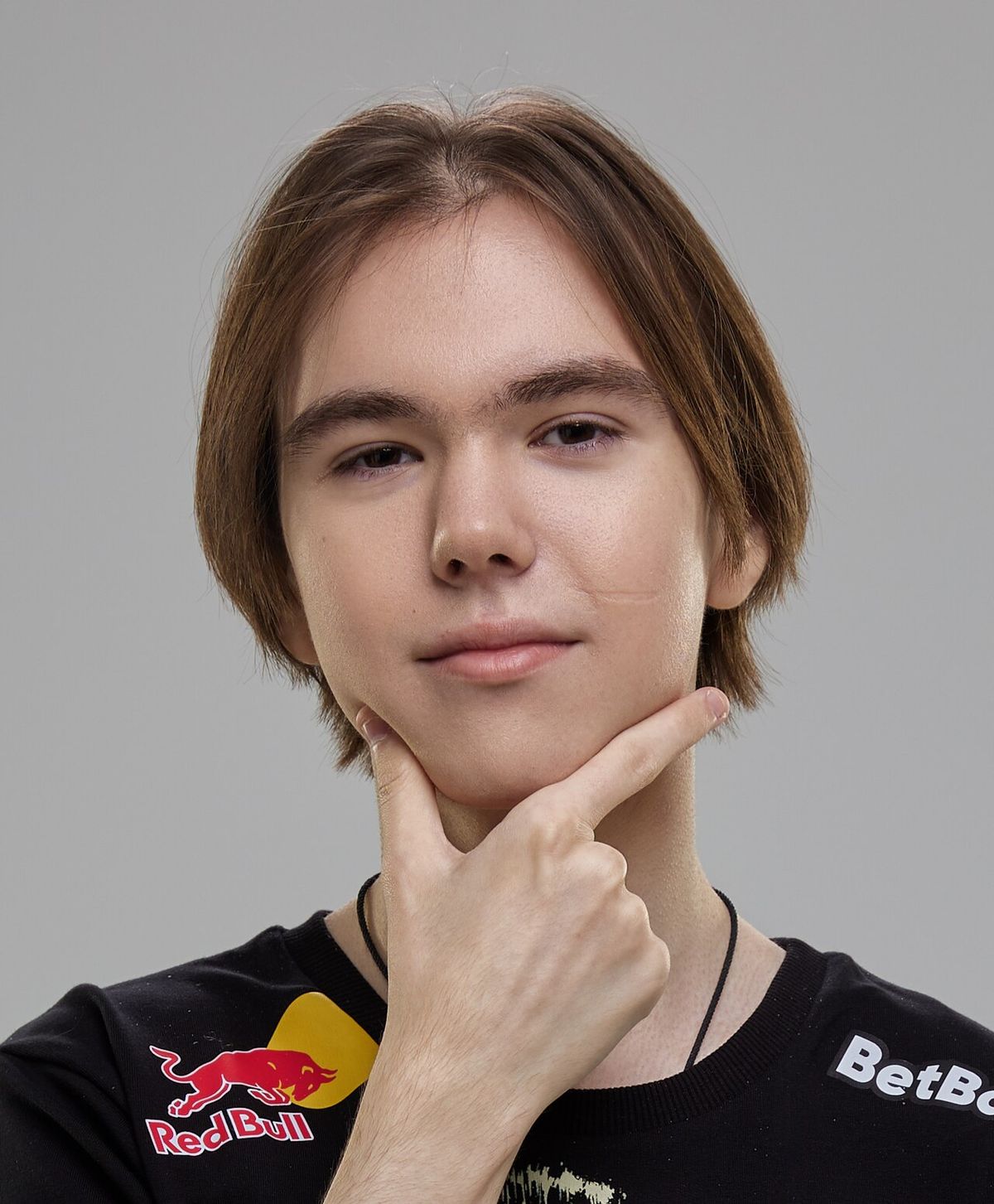
Faker
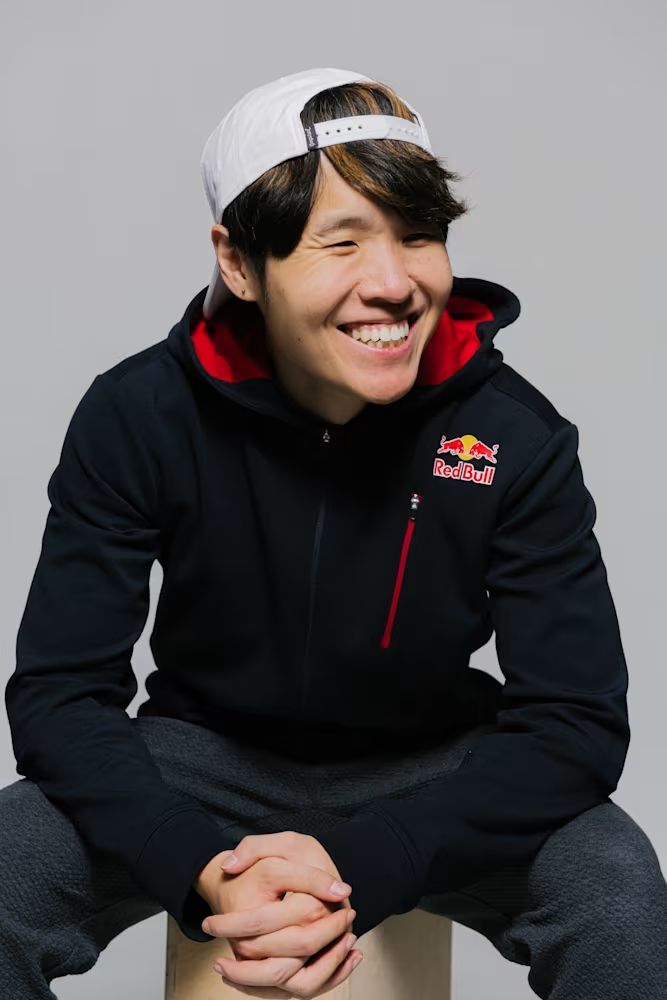
Lee Sang-hyeok, known globally as Faker, is a South Korean professional League of Legends player and the mid-laner for T1. He is widely considered the greatest player in the game's history, having won a record six World Championship titles and ten domestic LCK championships. His career, spent entirely with one organization, has defined an era of esports.

| Born | May 7, 1996 |
|---|---|
| Nationality | South Korean |
| Game | League of Legends |
| Role | Mid-laner |
| Teams | T1 (formerly SK Telecom T1) |
| LCK Titles | 10 |
| World Championship Titles | 6 |
| MSI Titles | 2 |
| Hall of Fame | ESL Esports Hall of Fame (2019), LoL Esports Hall of Legends (2024) |
Early Life and Path to Pro
Faker was born on May 7, 1996, in Seoul and spent his early years in the city's Gangseo District under the care of his grandparents and his father, Lee Kyung-joon. Described as an introverted child, he challenged himself with puzzles like the Rubik's Cube and taught himself foreign languages. His initial gaming experience involved arcade titles like Tekken and King of Fighters before he moved on to PC games such as Maplestory and Warcraft III.
League of Legends debuted in South Korea in 2011, and Faker quickly embraced it. His high skill level led to long queue times in unranked matches, prompting him to start playing the competitive ranked mode. While attending Mapo High School, the same school as his future rival Kim Deft, Faker asked his father for permission to drop out to pursue esports professionally. His father agreed a month later, clearing the path for his career.
Rookie Year and Instant Stardom
Faker began his professional career in 2013 after being noticed by SK Telecom T1 2. He made his televised debut on April 6, 2013, securing a solo kill against the South Korean All-Star mid laner Kang Ambition. In his first tournament, OGN Champions Korea 2013 Spring, he accounted for 31.6 percent of his team's kills, finishing as the third-highest performer.
His reputation was confirmed during the OGN Champions Korea 2013 Summer finals against KT Rolster Bullets. In a famous moment, Faker was ambushed by Yoo Ryu but executed a reversal to kill his opponent, a play still regarded as one of the most famous in League of Legends history. This led to a reverse sweep victory and Faker's first major title. Months later, he won the Season 3 World Championship, with his team defeating China's Royal Club in a one-sided final.
Building a Dynasty: 2014 to 2017
Following his rookie success, Faker and SKT went undefeated to win the OGN Champions Winter 2013-2014 title. The team hit a snag in 2014, however, failing to qualify for the World Championship after a loss where Faker gave away the first kill in three consecutive games. New league rules forced SKT to merge its two squads into one roster for 2015.
The 2015 season introduced a new dynamic as Faker shared the mid-lane position with teammate Lee Easyhoon. After being benched following a loss in the season opener, Faker returned to secure a pentakill and win the series. He expressed dissatisfaction when Easyhoon started and won the LCK Spring finals, vowing to outperform him. At the 2015 Mid-Season Invitational finals, Faker was subbed in while his team was down 1-2. They won game four, but in game five his undefeated LeBlanc pick was countered, leading to a loss. He reclaimed the starting role to win the LCK Summer title and then his second World Championship, celebrating by eating a raw stalk of broccoli on stage.
In 2016, Faker won the IEM World Championship, another LCK title, and his first MSI title, where he was named MVP. On July 11, 2016, he became the first LCK player to reach 1,000 kills. He then won his third World Championship in a close 3-2 series, earning the tournament MVP award. By year's end, he was frequently called the Michael Jordan of esports. In 2017, he added another LCK title and a second straight MSI win. He reached his fourth World Championship final but suffered a sweeping 0-3 defeat, a loss that left him so upset he needed consolation from teammates.
Overcoming Adversity and Historic Three-Peat
The 2018 season was a struggle. SKT failed to qualify for the World Championship, and Faker was benched in favor of Choi Pirean during the summer split. A roster rebuild preceded the 2019 season, where Faker won two more LCK titles. At the 2019 Mid-Season Invitational, his team lost in the semifinals, but later that year he won Rift Rivals, becoming the first player to win all major Riot-organized international tournaments.
After the organization rebranded to T1 in 2020, Faker renewed his contract for three years. Domestic success continued with LCK titles in 2020, 2022, and two others between 2018 and 2022, but international trophies remained out of reach. This changed decisively in 2023. Faker led T1 to win the World Championship, then defended the title in 2024 and again in 2025. This three-peat is a first in the history of the tournament.
Individual Records and Honors
Faker's statistical records in the LCK are vast. He was the first player to reach 1,000, 2,000, and 3,000 kills, the first to earn 5,000 assists, and the first to win 700 games. His ten LCK championship titles are a league record. On the global stage, his six World Championship wins stand alone.
His trophy case includes two World Championship MVP awards, one MSI MVP, and two LCK Player of the Year awards. External recognition includes the Best Esports Athlete and PC Player of the Year at The Game Awards, PC Player of the Decade at the 2025 Esports Awards, and a spot on the Time 100 Most Influential People in Sports list in 2026. He was inducted into the ESL Esports Hall of Fame in 2019 and was announced as the inaugural inductee for the LoL Esports Hall of Legends in May 2024.
National Team and Personal Details
Faker has represented South Korea at the Asian Games, earning a silver medal in 2018 and a gold medal in 2022. He is a 39th generation descendant of the Gyeongju Lee clan and is a distant uncle of his former T1 teammate, Lee Gumayusi.
The Business and Cultural Icon
Beyond competition, Faker is a major marketing and media figure for esports. He appears in commercials for large brands and on television talk shows. In 2020, he expanded his role within T1 by becoming a part-owner and an executive of T1 Entertainment & Sports. His annual salary was estimated by the Olympics to be nearly five million US dollars as of 2020.
His decision to remain with one organization for his entire career, even after receiving offers from Chinese companies reported to be near one million US dollars in 2015, is a defining aspect of his story. His influence has shaped the perception of esports athletes worldwide, setting a benchmark for career longevity, loyalty, and competitive excellence.
FAQ
How many World Championships has Faker won?
Faker has won a record six League of Legends World Championship titles. His victories came in 2013, 2015, 2016, 2023, 2024, and 2025. The three consecutive wins from 2023 to 2025 are an achievement in the game's history.
What team does Faker play for?
Faker has played for the same organization his entire professional career, which debuted as SK Telecom T1 and was later rebranded to T1. He has never played for another professional team.
What is Faker's real name?
Faker's real name is Lee Sang-hyeok. He was born on May 7, 1996, in Seoul, South Korea. He is a 39th generation descendant of the Gyeongju Lee clan and is a distant uncle of his former T1 teammate Lee Gumayusi.
Why is Faker called the Unkillable Demon King?
The nickname Unkillable Demon King, along with God, was given to Faker during his peak dominance in the mid-2010s. It reflected his seemingly unstoppable and clutch performances in high-pressure matches, where he would often make miraculous plays to secure victory for his team.
Has Faker ever played for another team besides T1/SK Telecom T1?
No, Faker has never played for another professional team. He debuted with SK Telecom T1 in 2013 and has remained with the organization, now known as T1, for his entire career, even turning down lucrative offers from other regions to stay.
Source: English Wikipedia (CC BY-SA), rewritten by the Redington Cybersport desk.