VALORANT vs. MLBB: The Duel for Women's Esports Dominance
VALORANT's Game Changers and MLBB's Women's International represent contrasting models for women's esports success, with MLBB leading in peak viewership while VALORANT maintains a broader competitive infrastructure.
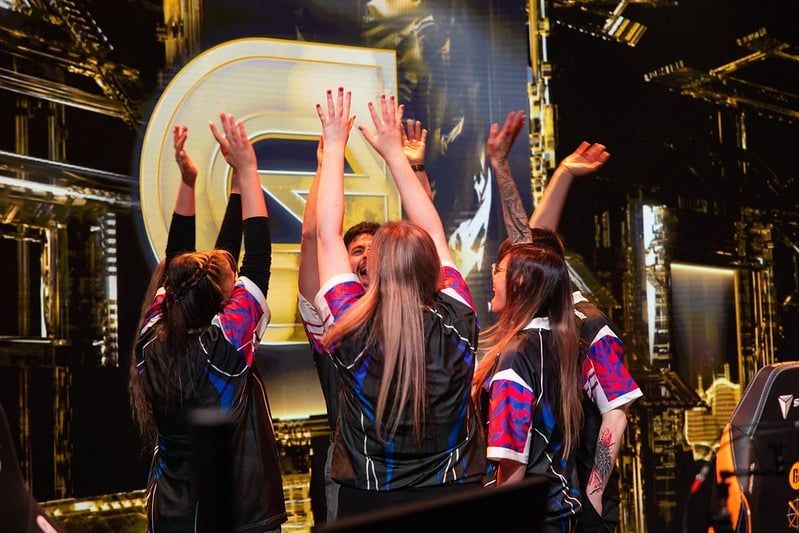
Women's esports has solidified around two dominant titles: VALORANT and Mobile Legends: Bang Bang (MLBB). Together, these games accounted for over 90% of female esports watch time in 2024, though their paths to prominence differ sharply. Where VALORANT built a structured global circuit through Game Changers, MLBB leveraged its Southeast Asian stronghold to produce record-breaking tournaments. By 2026, the contrast between peak viewership and ecosystem depth highlights an industry at a crossroads.
The Viewership Divide
MLBB holds undisputed dominance in peak concurrent viewership. Eight of the ten largest women's esports events across both titles belong to MLBB, including the all-time record of 1.37 million concurrent viewers during the 32nd SEA Games gold medal match. Even excluding national-team competitions, MLBB's flagship Women's International (MWI) at the 2026 Esports World Cup peaked at 565,483 viewers, surpassing VALORANT Game Changers' 2024 record of 464,695. The gap widened in 2025-2026 as MWI viewership grew 113% since joining the EWC, while Game Changers Championship viewership halved.
Sustained Engagement vs. Spectacle
VALORANT counters MLBB's viewership spikes with superior watch time longevity. Game Changers Championships consistently surpassed 5 million hours watched annually from 2022-2024, reaching 6.35 million in 2024. MWI only crossed the 5 million threshold in 2026. This stems partly from VALORANT's longer broadcast schedules, but average viewership tells a deeper story, Game Changers maintained approximately 125,000 average viewers in 2023-2024 before its 2025 decline, while MWI climbed to 129,500 by 2026.
Ecosystem Investment
Prize pool parity at the flagship level ($500,000 each) masks stark differences in broader investment. VALORANT allocated over $1.2 million of 2024's nearly $3 million women's esports prize pool, with women's competitions representing 13% of its total esports payouts versus MLBB's 9%. Riot Games' Upward Player Mobility program also created pathways from Game Changers to Challengers circuits, exemplified by Ava 'florescent' Eugene's 2025 signing with Apeks, a rarity in MLBB's more isolated structure.
Regional Foundations vs. Global Expansion
MLBB's growth drivers are multifaceted. The game's Southeast Asian mobile audience propelled Bahasa Malaysia, Indonesian, and Vietnamese broadcasts to disproportionate watch time shares. MWI expanded from regional beginnings to 60+ qualifying regions by 2026, adding Africa, Mongolia, and Western Europe. National-team events like the SEA Games provided supplemental spikes, with the 2023 edition setting the current viewership record. Meanwhile, VALORANT's 2025-2026 regional declines, including a 51% peak viewership drop at the Championship, were partially offset by EMEA Stage 1's 79% watch time rebound in 2026.
The Crossroads Moment
Neither model has definitively outpaced the other. MLBB delivers unparalleled spectacle through concentrated international events and regional passion, while VALORANT's strength lies in systematic development and integration with its broader esports framework. The 2026 Game Changers Championship in São Paulo will test whether VALORANT's ecosystem can regain flagship momentum or cede further ground to MLBB's viewership supremacy. What remains clear is that women's esports' future will be written through this ongoing duality, one prioritizing scale, the other sustainability.